biology infographics
Every InfoGraphHub infographic tagged “biology”.
 Science
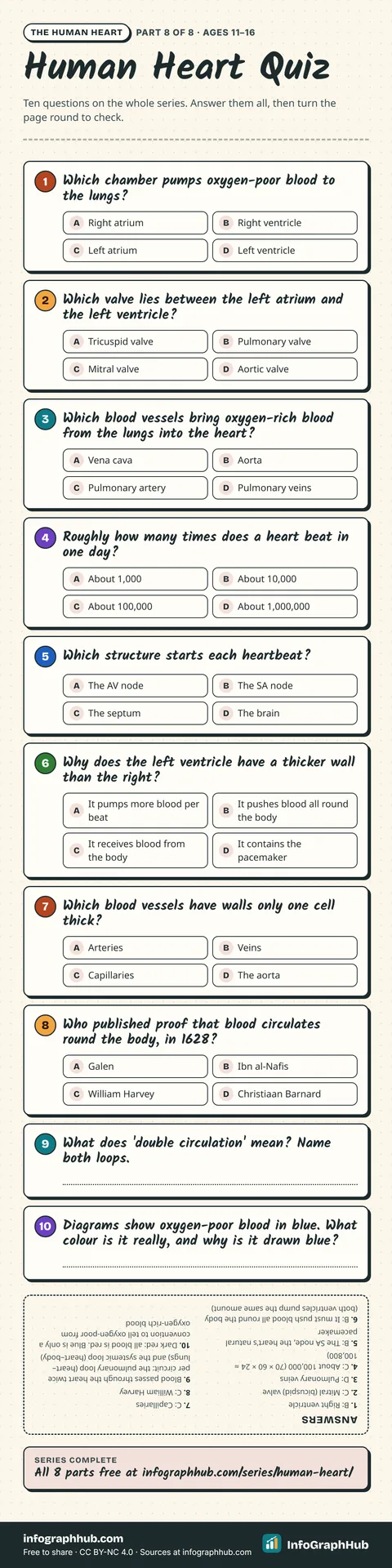
Human Heart Quiz: Test Yourself
Ten questions covering the whole Human Heart series: chambers, valves and vessels, the route of blood, heart numbers, capillaries, the SA node, the history of discovery and common myths. Eight are multiple choice and two need a short written answer.
 Science
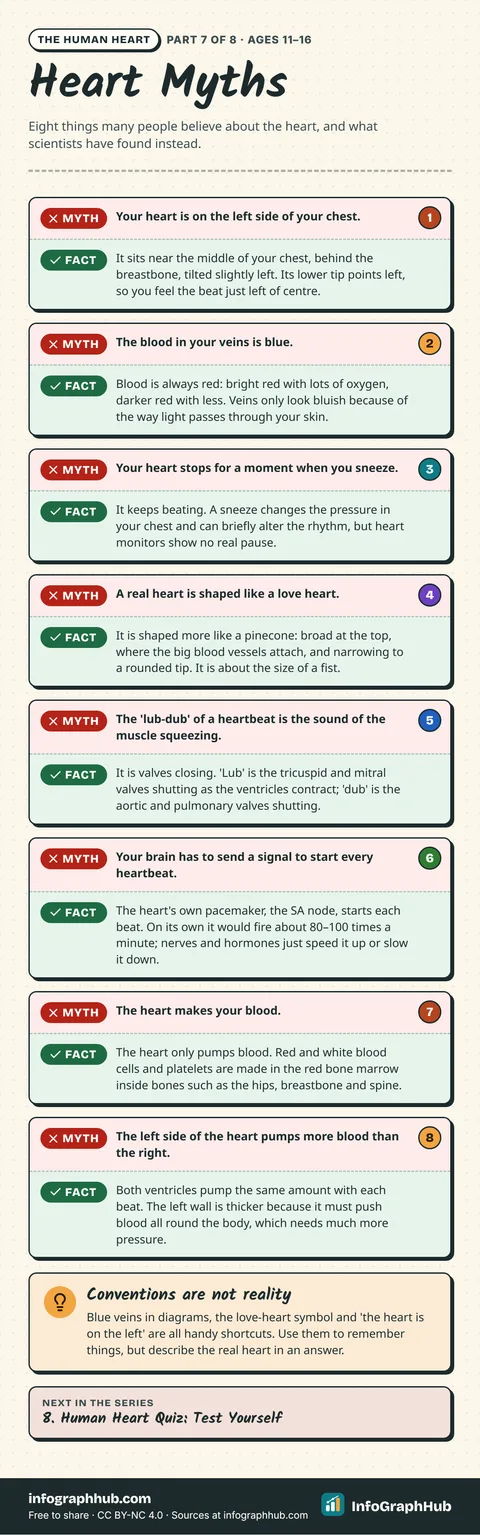
Heart Myths and the Real Science
Eight common myths about the heart, corrected with evidence: it is not on the left, blood in veins is not blue, it does not stop when you sneeze, it is not love-heart shaped, and the 'lub-dub' is the sound of valves closing.
 Science
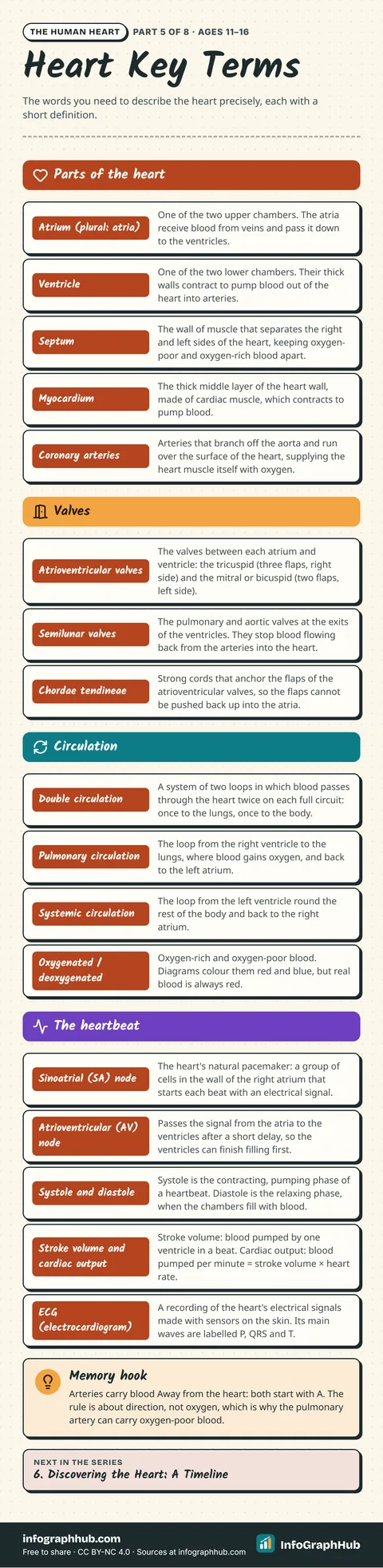
Heart Key Terms and Definitions
Seventeen words you need to describe the heart precisely, from atrium and septum to semilunar valves, double circulation, the SA node, systole, cardiac output and the ECG, each with a short, exam-ready definition.
 Science
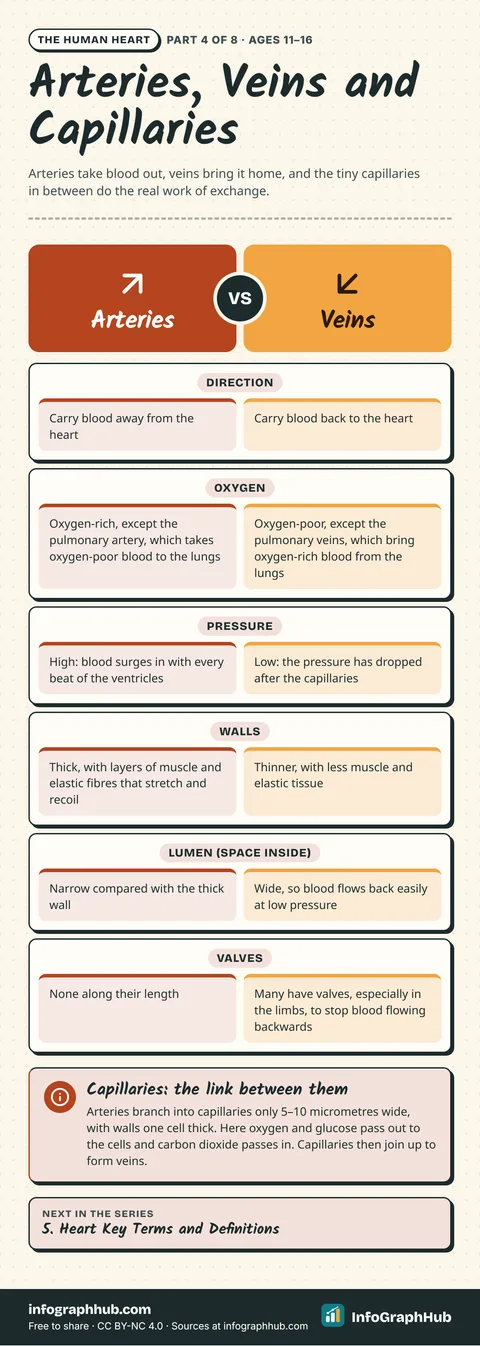
Arteries, Veins and Capillaries
The three kinds of blood vessel compared: arteries carry blood away from the heart under high pressure, veins bring it back at low pressure with the help of valves, and capillaries, only one cell thick, are where the real exchange happens.
 Science
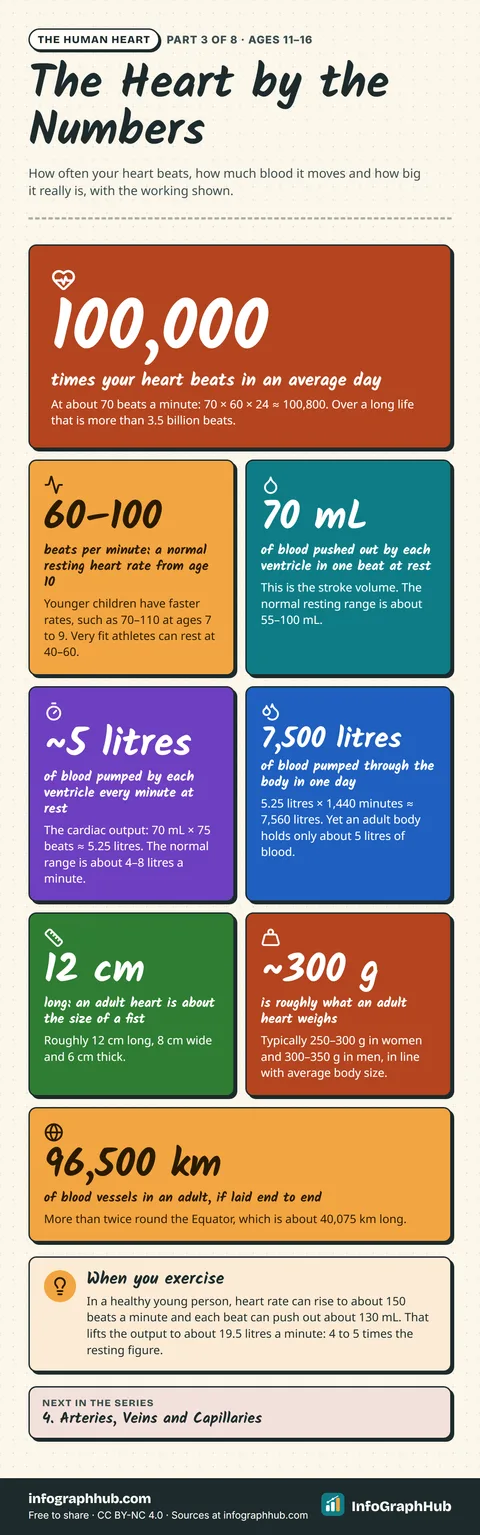
The Heart by the Numbers
How often does your heart beat, and how much blood does it move? About 100,000 beats a day, roughly 5 litres a minute at rest and some 7,500 litres a day, from an organ about the size of your fist. Every figure is sourced and worked through.
 Science
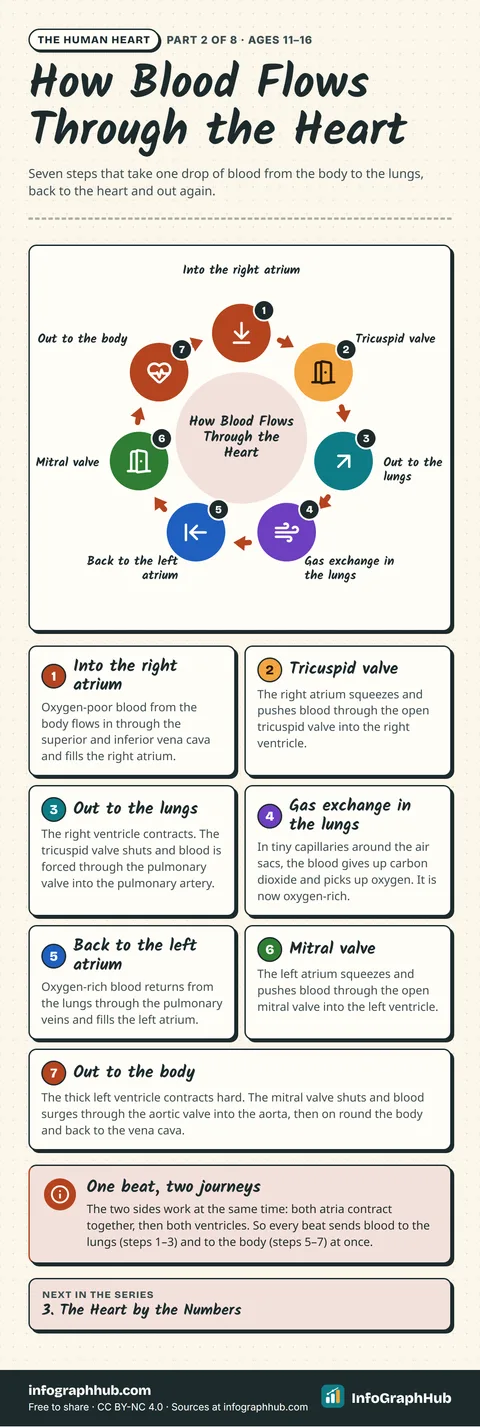
How Blood Flows Through the Heart
Follow one drop of blood through the heart in seven steps: in through the vena cava, through the right side to the lungs, back to the left side and out through the aorta. Includes double circulation and what keeps each beat in order.
 Science
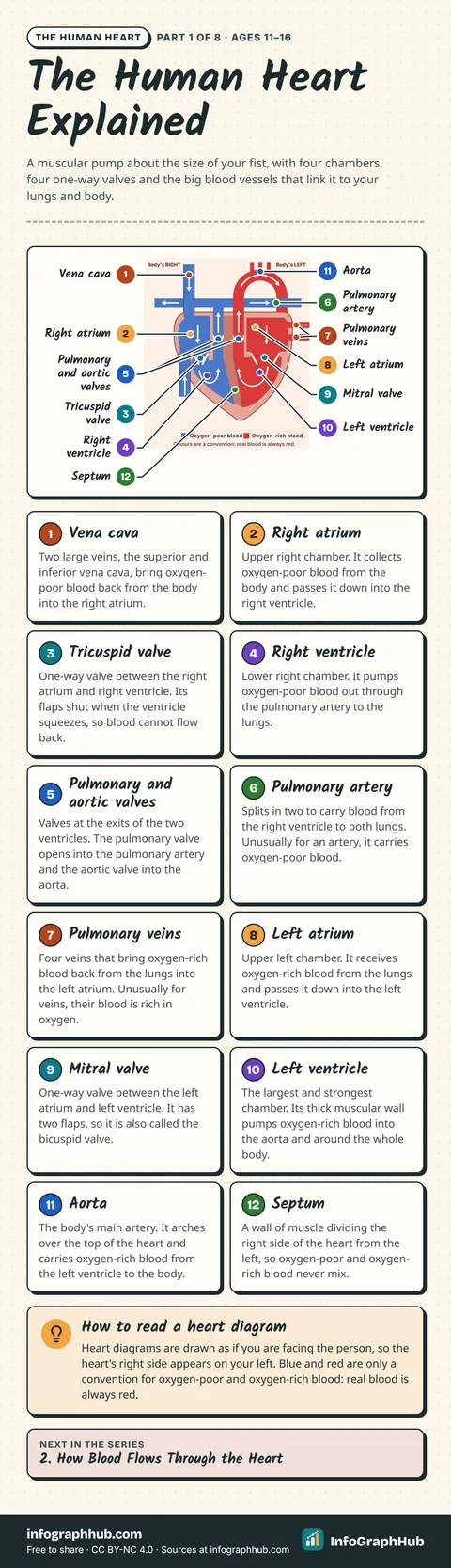
The Human Heart Explained
The heart is a muscular pump in the middle of your chest. A labelled front-view diagram of its four chambers, four one-way valves, the septum and the great blood vessels that link it to the lungs and the rest of the body.
 Science
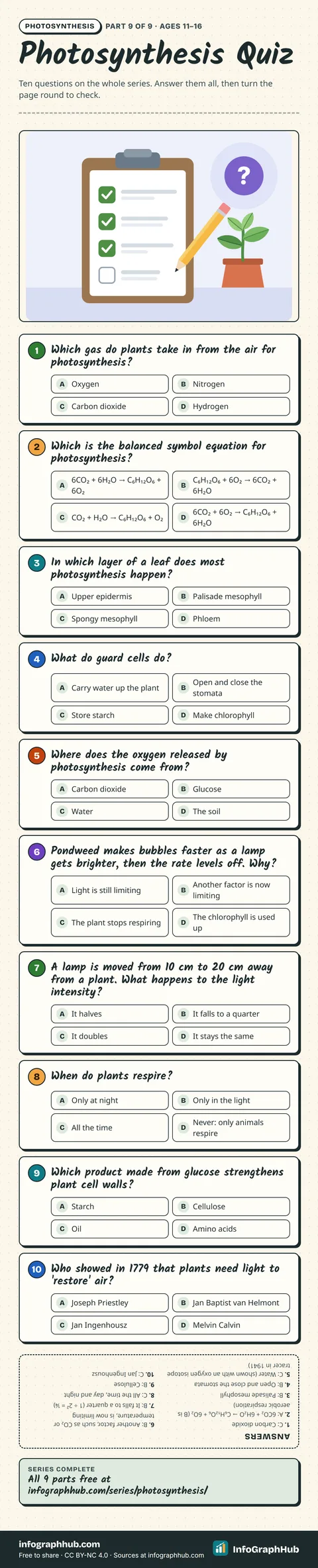
Photosynthesis Quiz: 10 Questions with Answers
Ten multiple-choice questions on the whole Photosynthesis series: the equation, leaf structure, where the oxygen comes from, limiting factors, the inverse square law, respiration, uses of glucose and the history of discovery.
 Science
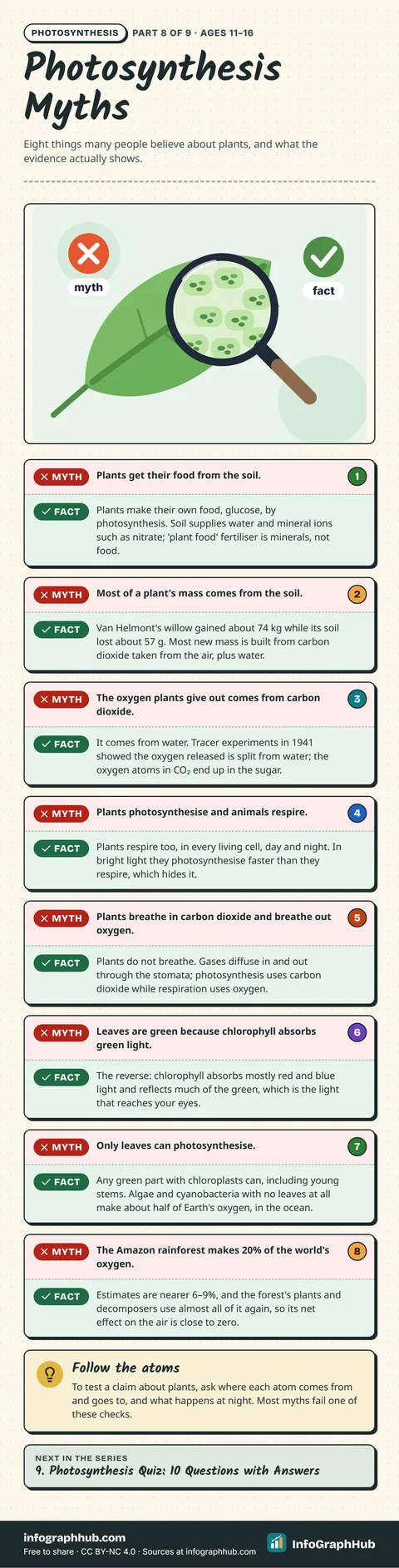
Photosynthesis Myths: What Plants Really Do
Eight common myths about photosynthesis, corrected with evidence: plants do not get food or most of their mass from soil, they do respire, they do not breathe, their oxygen comes from water, and the Amazon is not the planet's lungs.
 Science
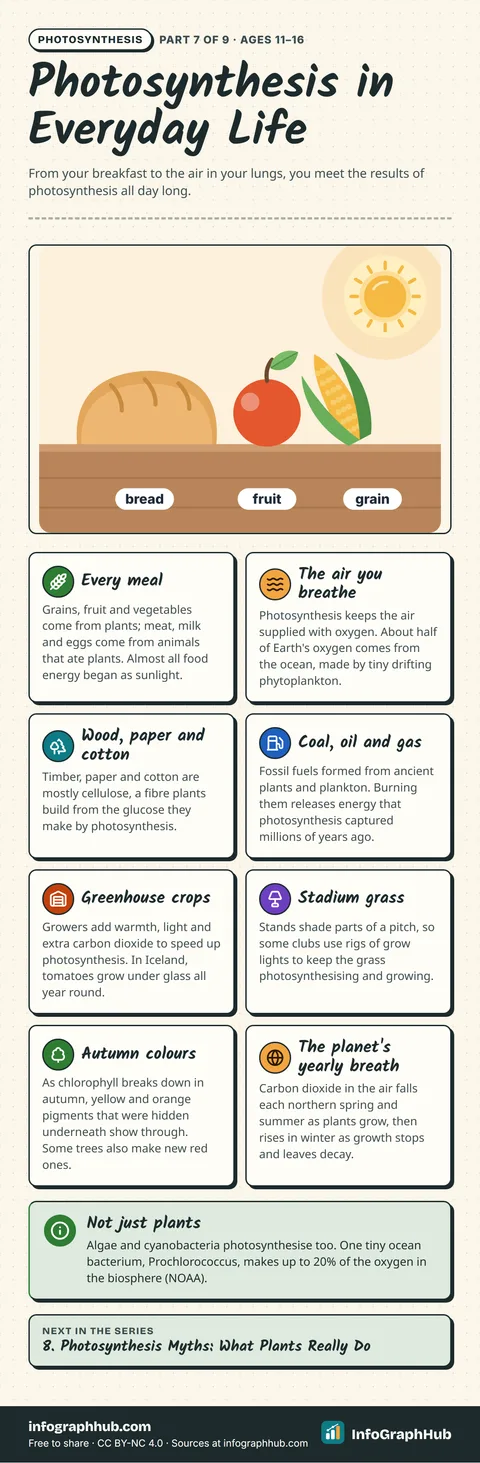
Photosynthesis in Everyday Life: 8 Places You Meet It
Photosynthesis is behind your breakfast, the air you breathe, the paper you write on and the fuel in many engines. Eight everyday examples, from ocean plankton and greenhouse tomatoes to autumn colours and the planet's yearly 'breath'.
 Science
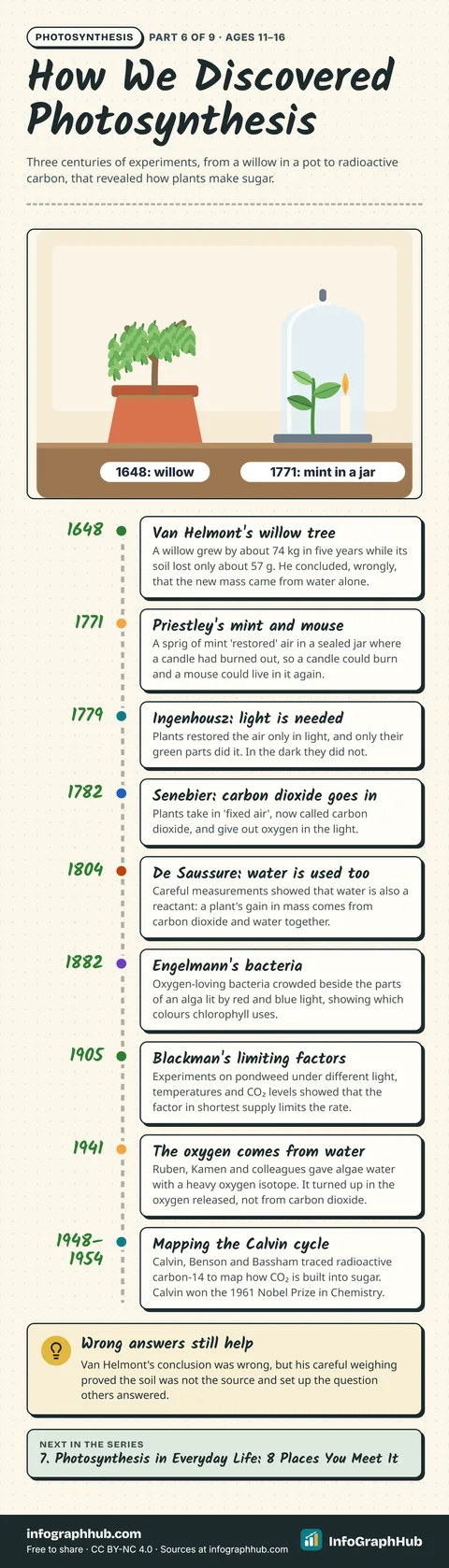
How We Discovered Photosynthesis: A Timeline
From van Helmont's willow tree to the Calvin cycle: nine experiments over three centuries that revealed how plants use light, carbon dioxide and water to make sugar, and showed that the oxygen they release comes from water.
 Science
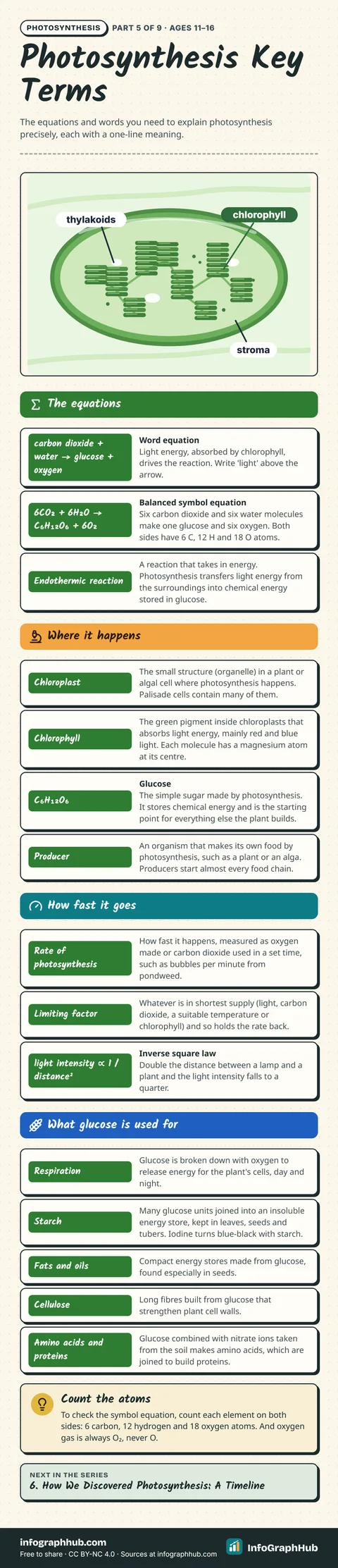
Photosynthesis Key Terms and Equations
A revision cheat sheet for photosynthesis: the word and balanced symbol equations, key terms such as chlorophyll, chloroplast, glucose and limiting factor, the inverse square law, and the five ways a plant uses its glucose.
 Science
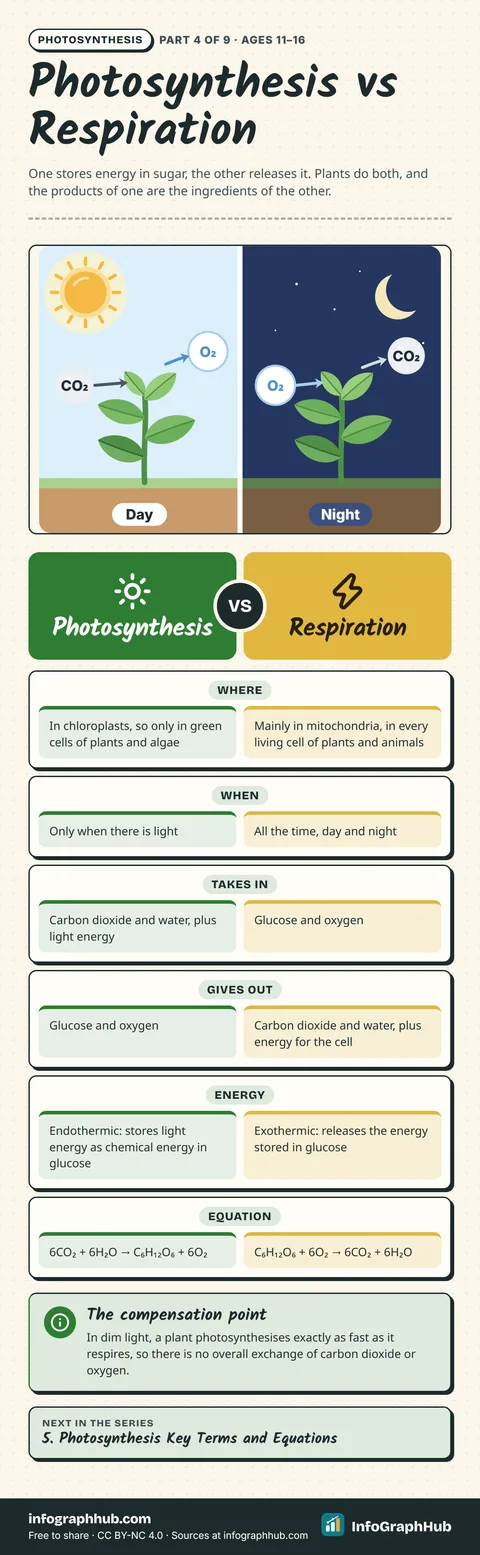
Photosynthesis vs Respiration: Key Differences
Photosynthesis stores energy in glucose; respiration releases it. Compare where and when each happens, what goes in and comes out, and why plants do both, plus the compensation point and the day and night gas exchange of a leaf.
 Science
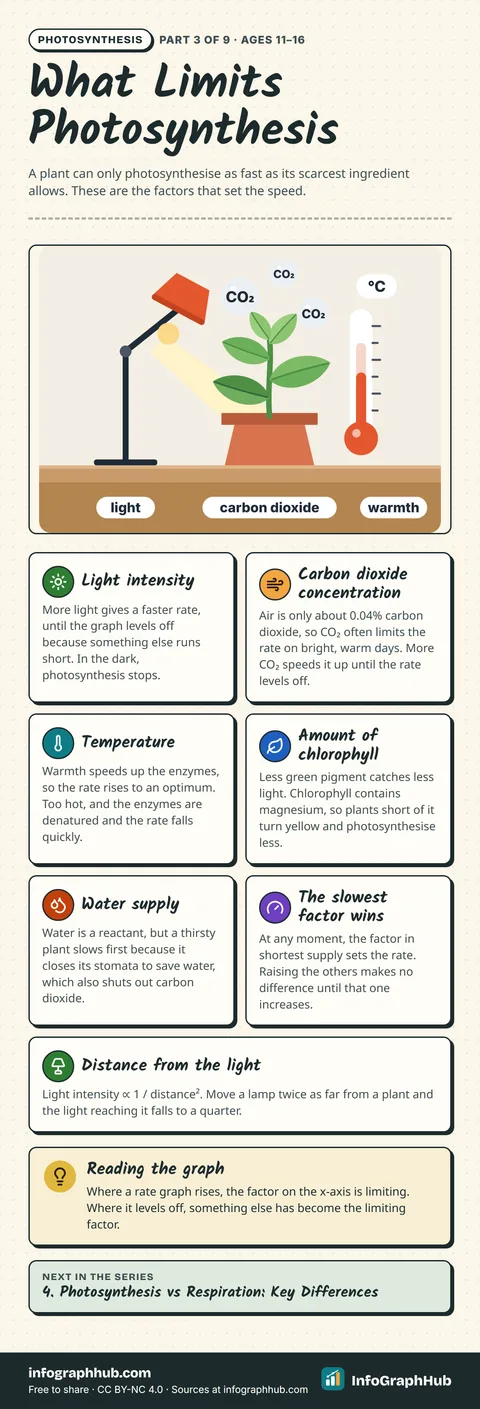
What Limits Photosynthesis? The Limiting Factors
The rate of photosynthesis is set by whatever is in shortest supply: light intensity, carbon dioxide, temperature, chlorophyll or water. See how each factor works, how to read rate graphs and how the inverse square law applies.
 Science
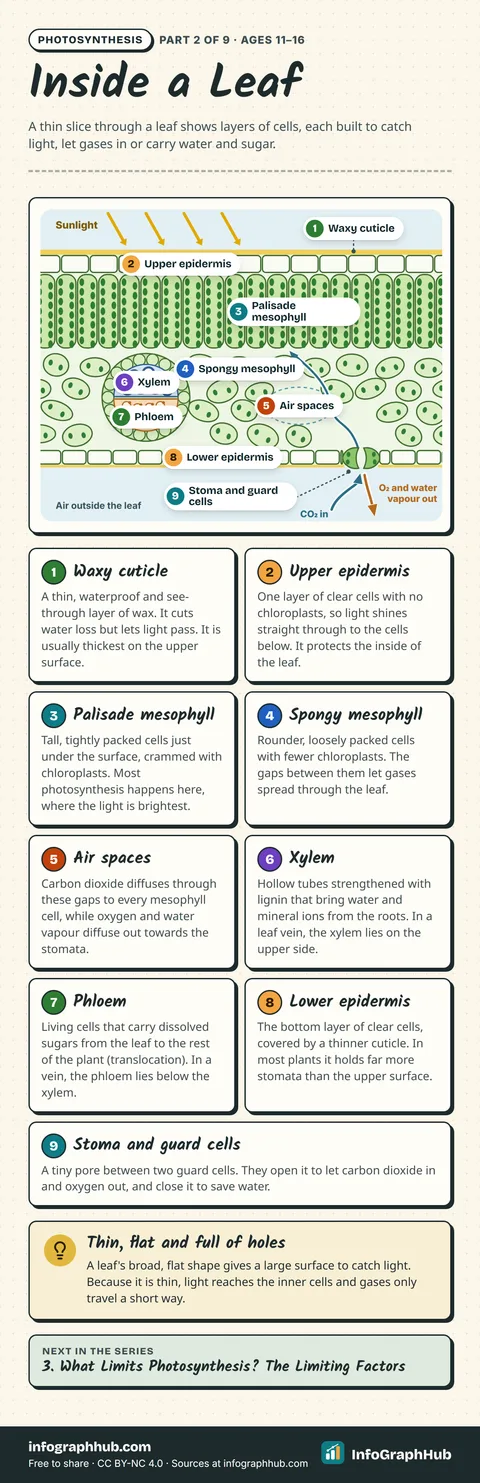
Inside a Leaf: Labelled Leaf Cross-Section
A labelled cross-section of a leaf, from the waxy cuticle to the stomata. See how each layer, from palisade cells packed with chloroplasts to air spaces, veins and guard cells, helps the leaf photosynthesise.
 Science
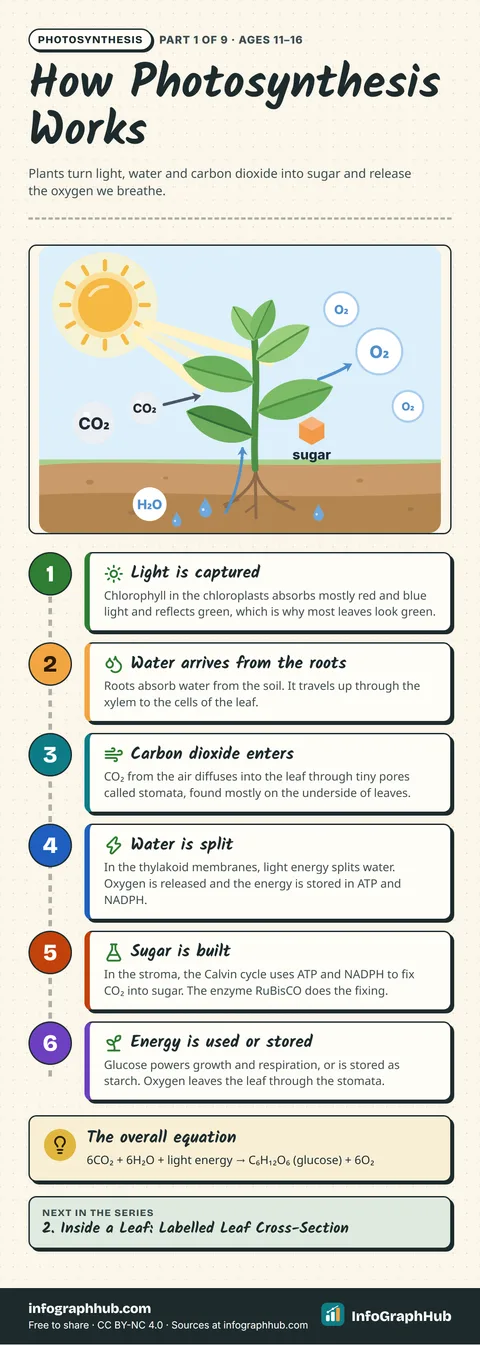
How Photosynthesis Works: From Sunlight to Sugar
Photosynthesis is how plants use light energy to turn carbon dioxide and water into glucose, releasing oxygen as a by-product. It happens in chloroplasts in two linked stages: the light-dependent reactions and the Calvin cycle.
 Science
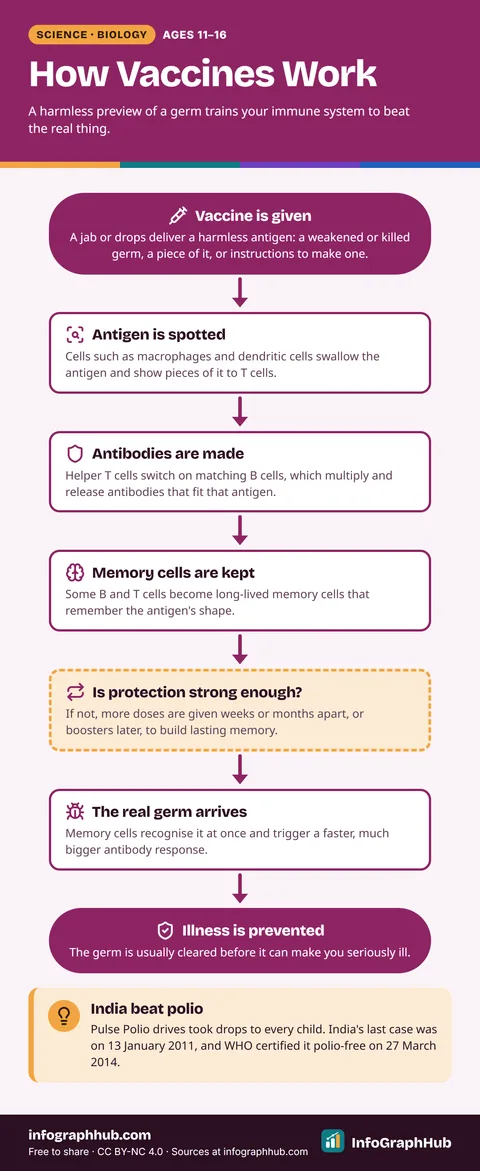
How Vaccines Work: Training Your Immune System
Vaccines work by imitating an infection. They show your immune system a harmless antigen from a germ, so it makes matching antibodies and memory cells that can fight the real germ quickly if it ever arrives.
 Science
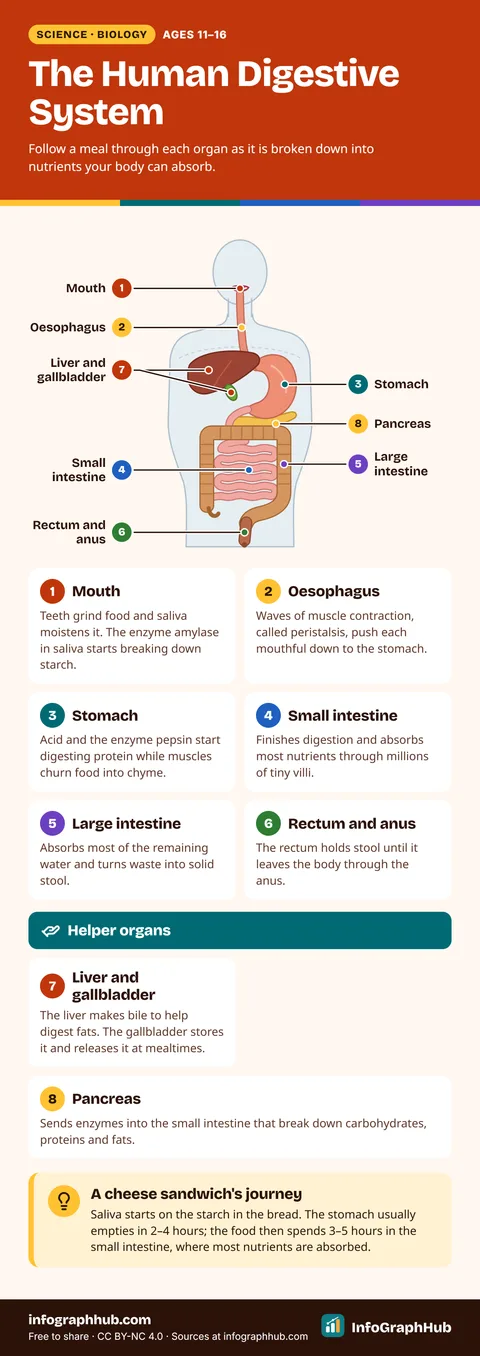
The Human Digestive System: How Food Becomes Energy
The digestive system breaks food into nutrients small enough to enter the blood. Food passes from the mouth through the oesophagus, stomach and intestines, helped by juices from the liver, gallbladder and pancreas.
 Science
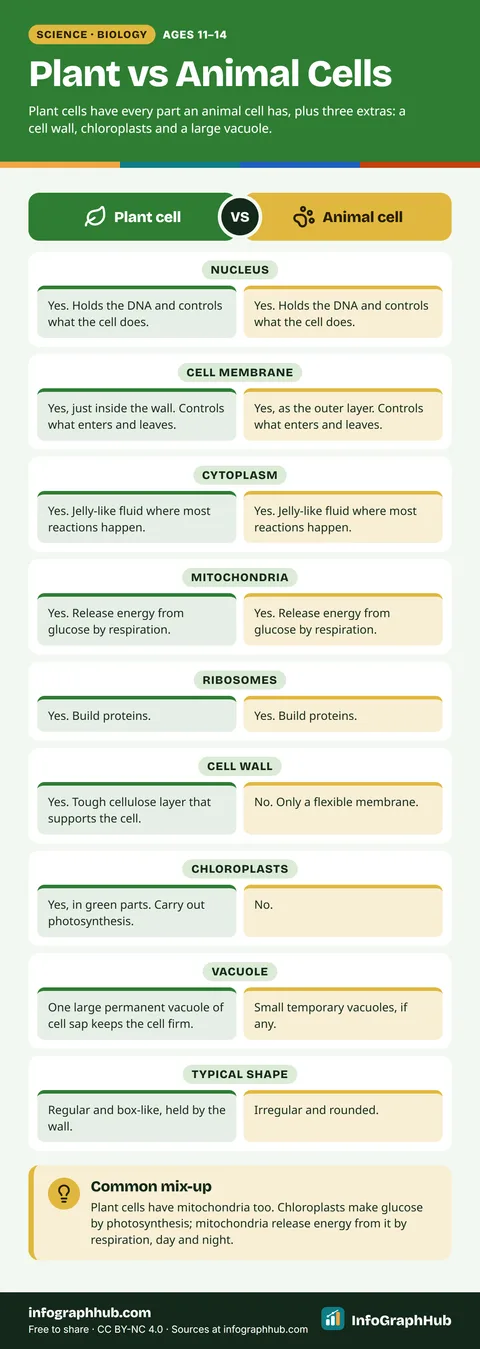
Plant vs Animal Cells: What Each Part Does
Plant and animal cells share a nucleus, cell membrane, cytoplasm, mitochondria and ribosomes. Plant cells also have a cellulose cell wall, chloroplasts and a large permanent vacuole. This comparison poster shows each part and its job.