world war one infographics
Every InfoGraphHub infographic tagged “world war one”.
 History & Geography
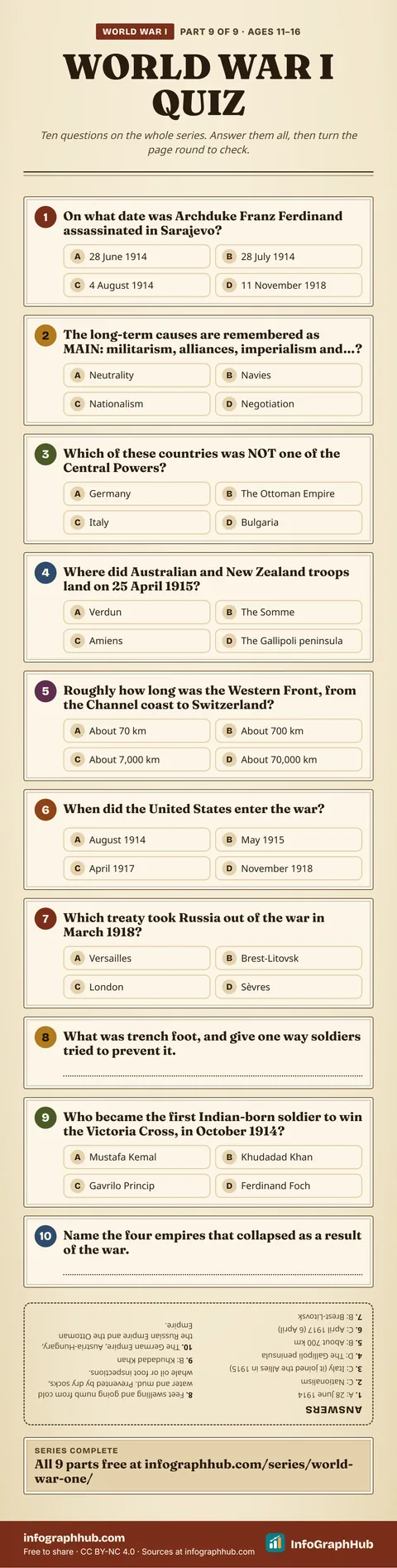
World War I Quiz: Test Yourself
Ten questions covering the whole World War I series: the trigger and causes, the two sides, Gallipoli, the Western Front, the USA's entry, Russia's exit, trench life, a key soldier and the empires that fell. Eight are multiple choice and two need a short written answer, with a worked answer key.
 History & Geography
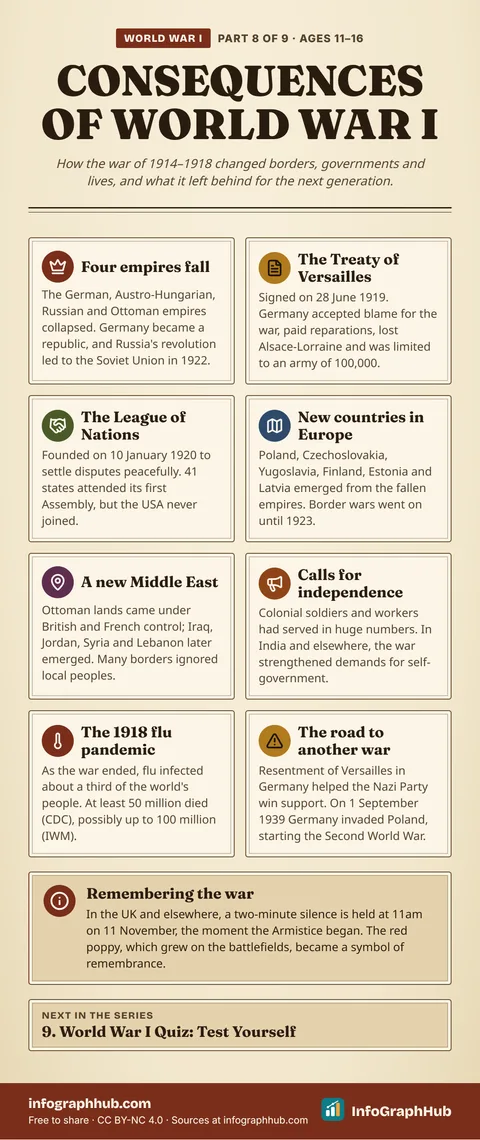
Consequences of World War I
What World War I changed: the fall of four empires, the Treaty of Versailles, the League of Nations, new countries and borders in Europe and the Middle East, years of further fighting, the 1918 flu pandemic, new demands for independence and the road to the Second World War.
 History & Geography
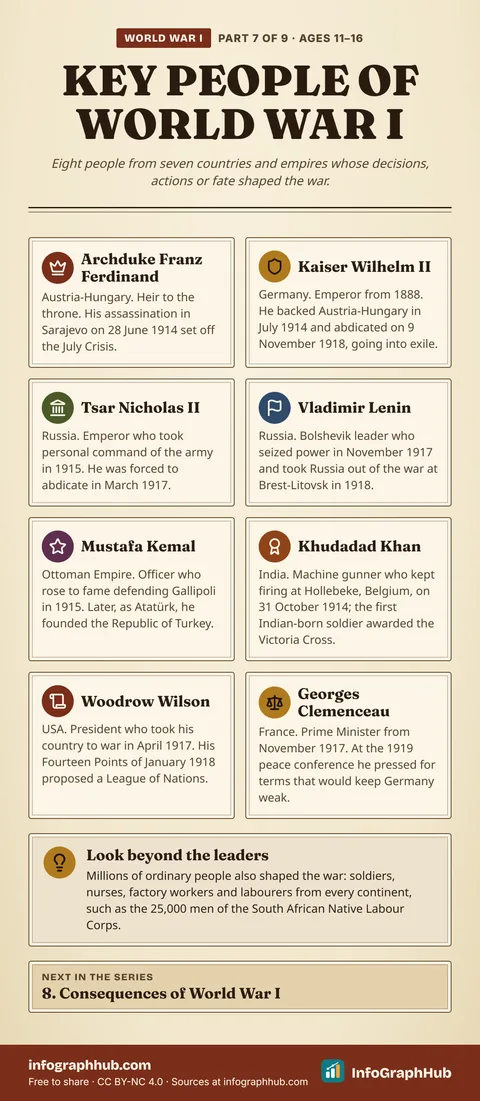
Key People of World War I
Eight people who shaped World War I, from emperors and revolutionaries to a front-line soldier: Franz Ferdinand, Wilhelm II, Nicholas II, Lenin, Mustafa Kemal, Khudadad Khan, Woodrow Wilson and Georges Clemenceau, each with a neutral one-line role.
 History & Geography
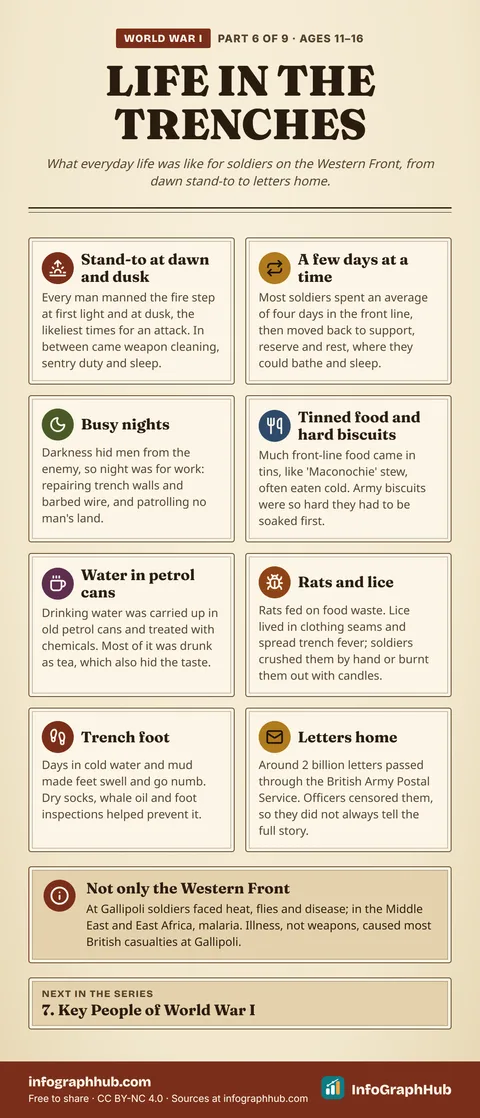
Life in the Trenches in World War I
What everyday life was like for soldiers in the trenches of World War I: the daily routine and stand-to, how long men stayed in the front line, food and water, rats, lice and trench foot, letters home, and how other fronts differed.
 History & Geography
World War I by the Numbers
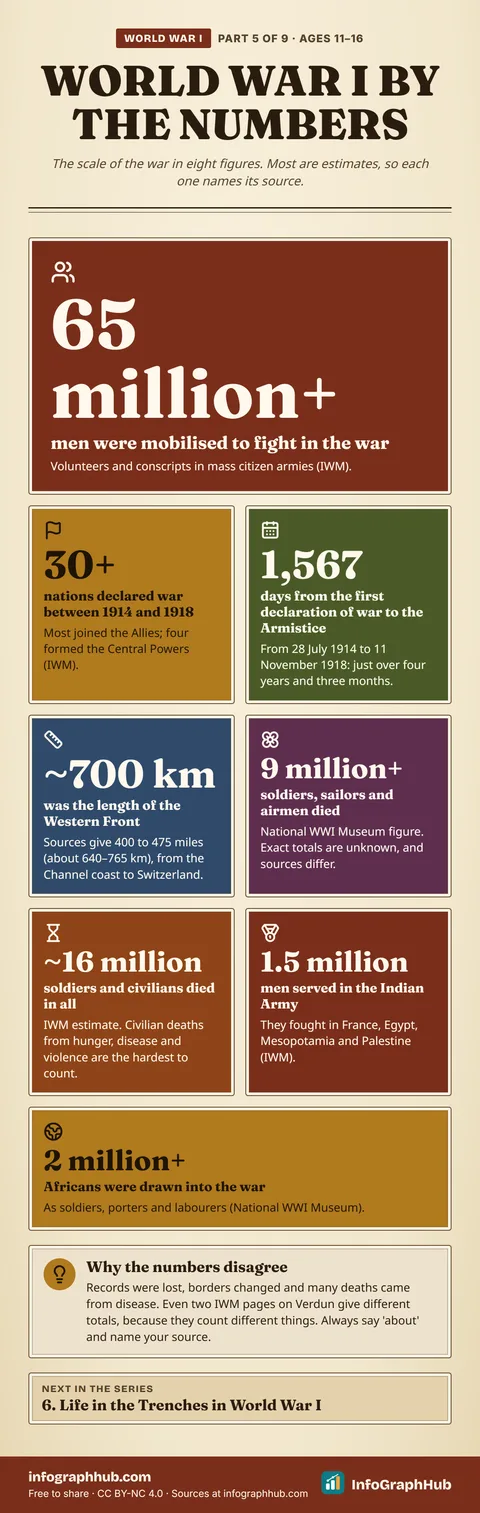
The scale of World War I in eight numbers: over 65 million men mobilised, more than 30 nations at war, 1,567 days of fighting, a Western Front of about 700 km, more than 9 million military deaths and about 16 million deaths in all, with sources named and their differences explained.
 History & Geography
The Allies vs the Central Powers
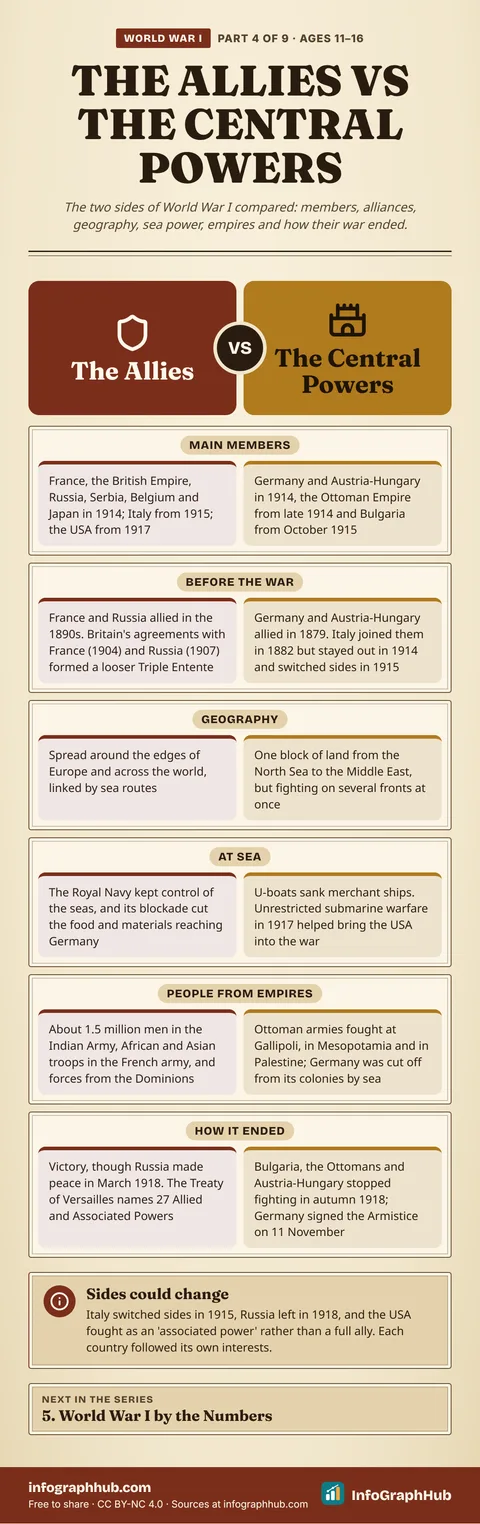
The two sides of World War I compared: who belonged to the Allies and the Central Powers, how their alliances formed, where they were, their strengths at sea, the people they drew from their empires, and how each side's war ended.
 History & Geography
World War I Timeline
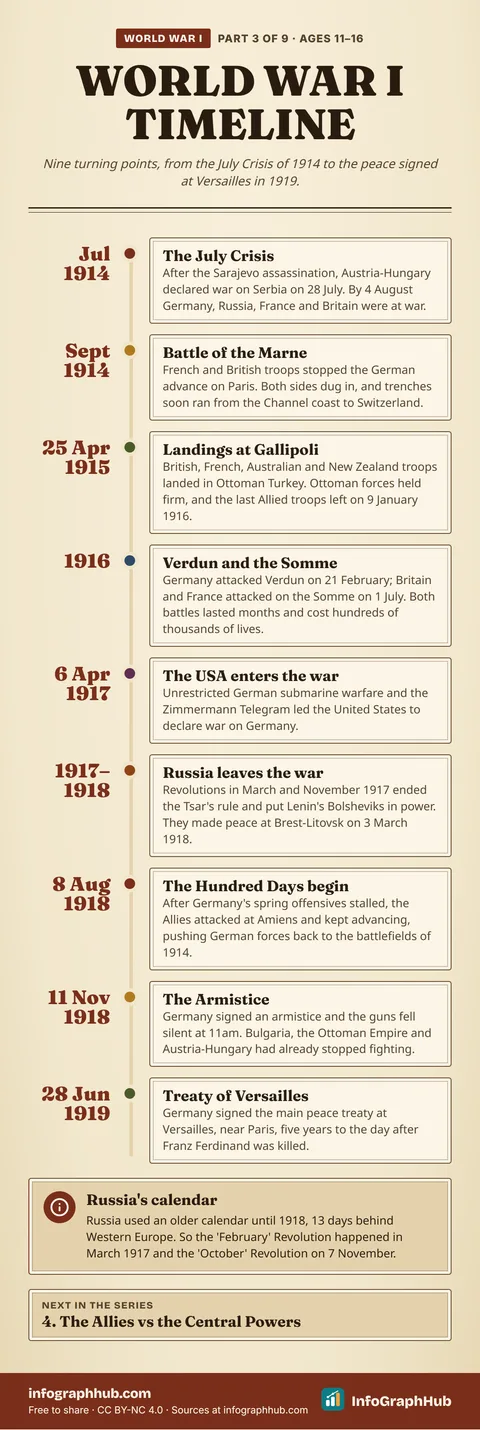
The key events of World War I in order, from the July Crisis of 1914 to the Treaty of Versailles on 28 June 1919: the Marne, Gallipoli, Verdun and the Somme, the USA's entry, Russia's revolutions, the Hundred Days and the Armistice.
 History & Geography
Causes of World War I
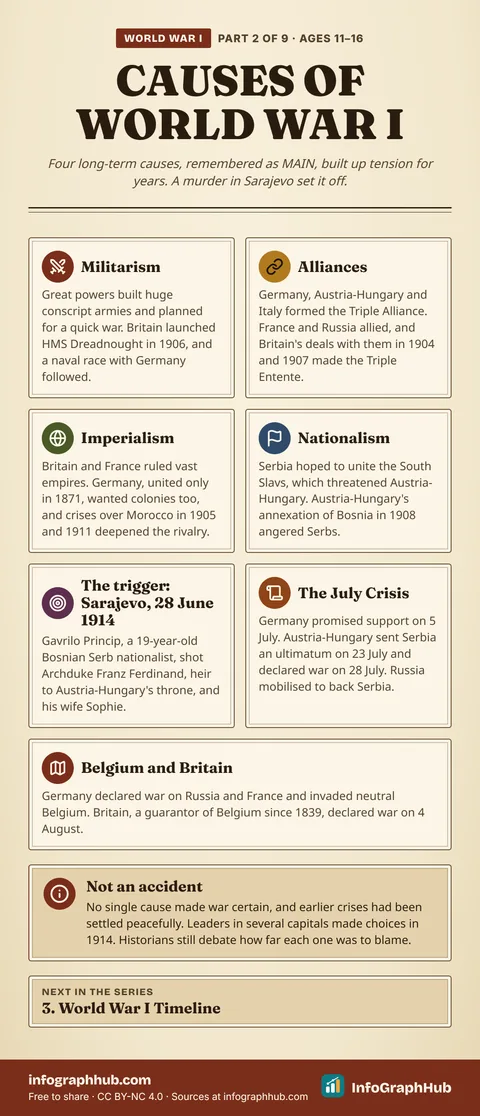
Why did World War I start? The long-term causes (militarism, alliances, imperialism and nationalism, remembered as MAIN), the assassination of Archduke Franz Ferdinand on 28 June 1914, and the five-week July Crisis that turned a Balkan quarrel into a world war.
 History & Geography
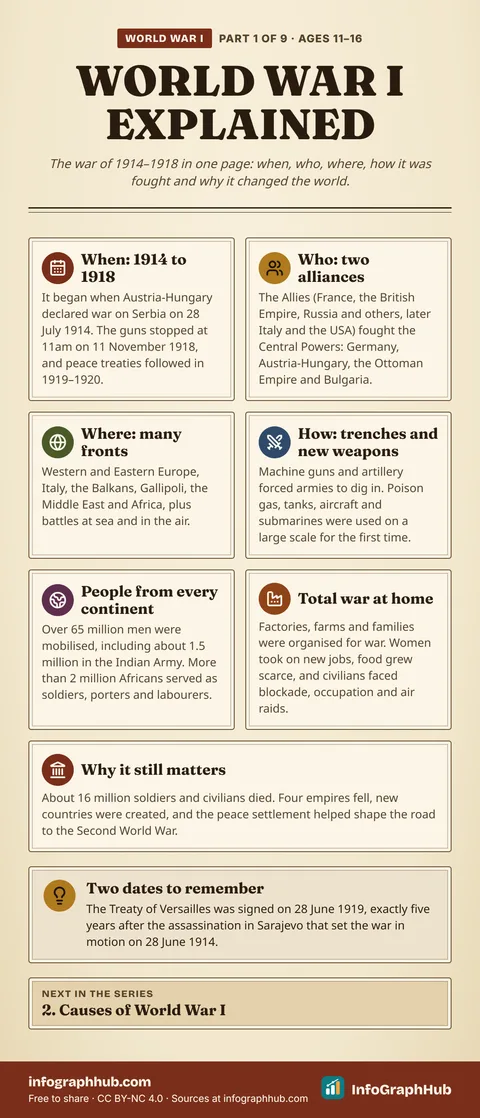
World War I Explained
World War I in one page: when it was fought (1914–1918), who fought on each side, where the fronts were, how new weapons changed warfare, how whole societies were drawn in, and why a war that killed about 16 million people still matters.