History & GeographyVisual listPart 6 of 9, World War IUpdated 1 October 2026
Life in the Trenches in World War I
What everyday life was like for soldiers in the trenches of World War I: the daily routine and stand-to, how long men stayed in the front line, food and water, rats, lice and trench foot, letters home, and how other fronts differed.
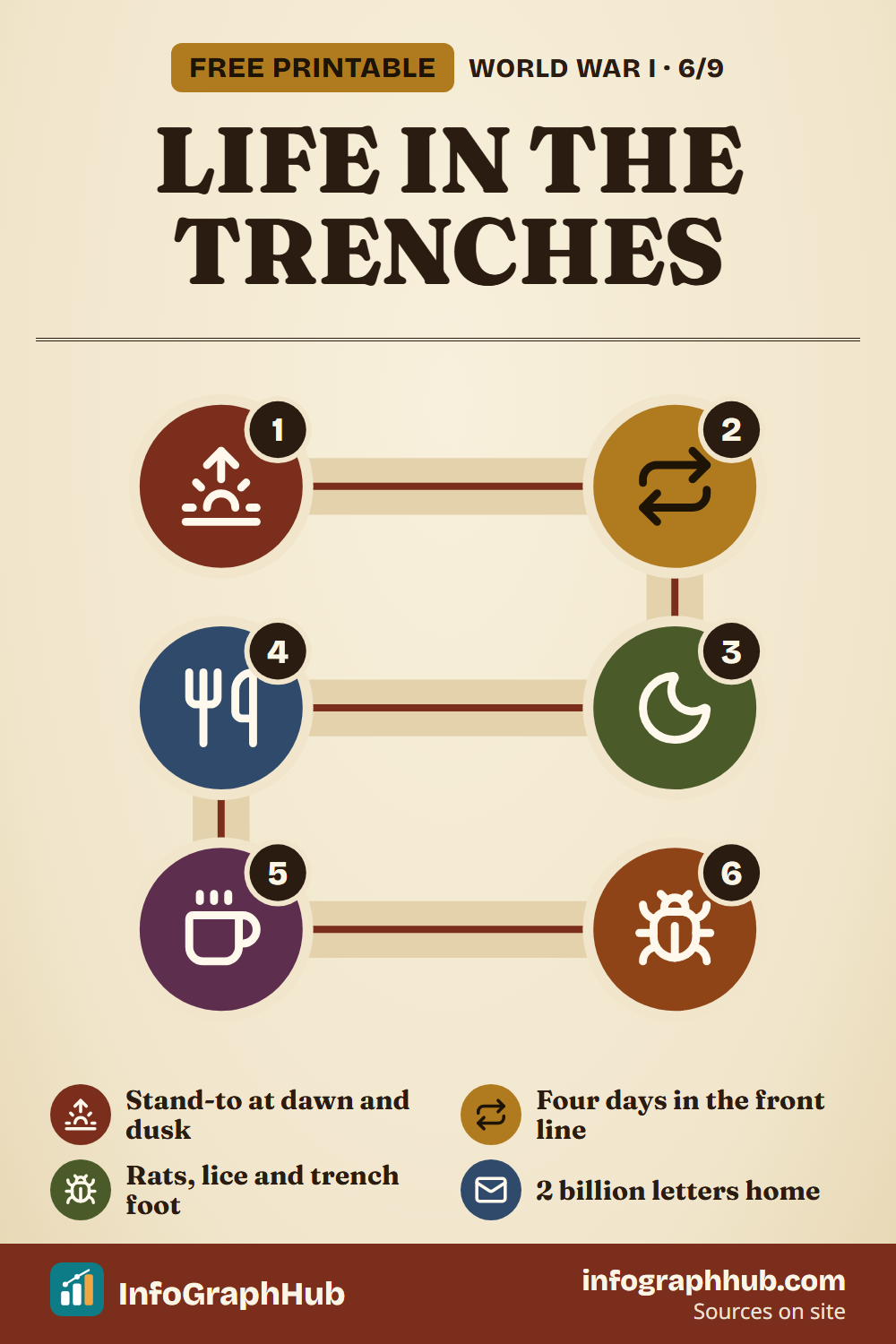
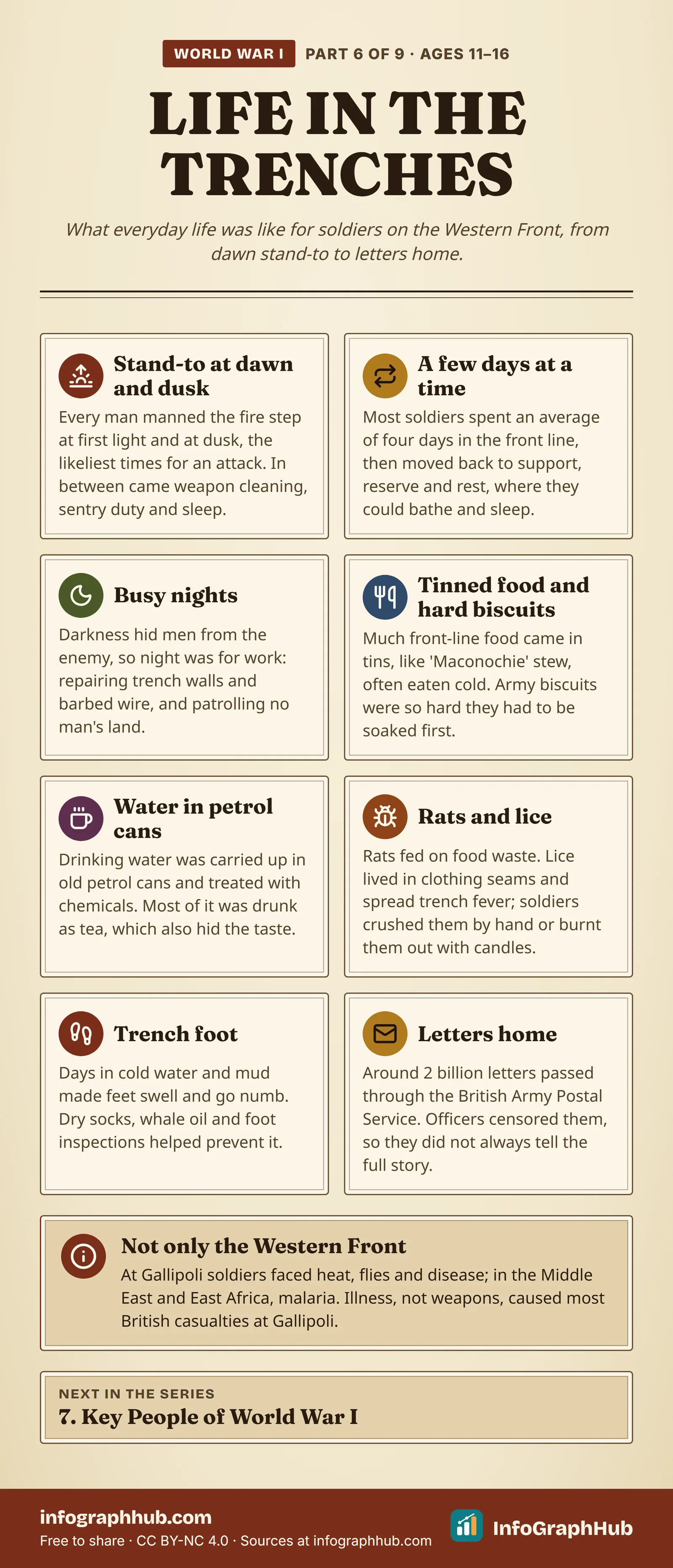
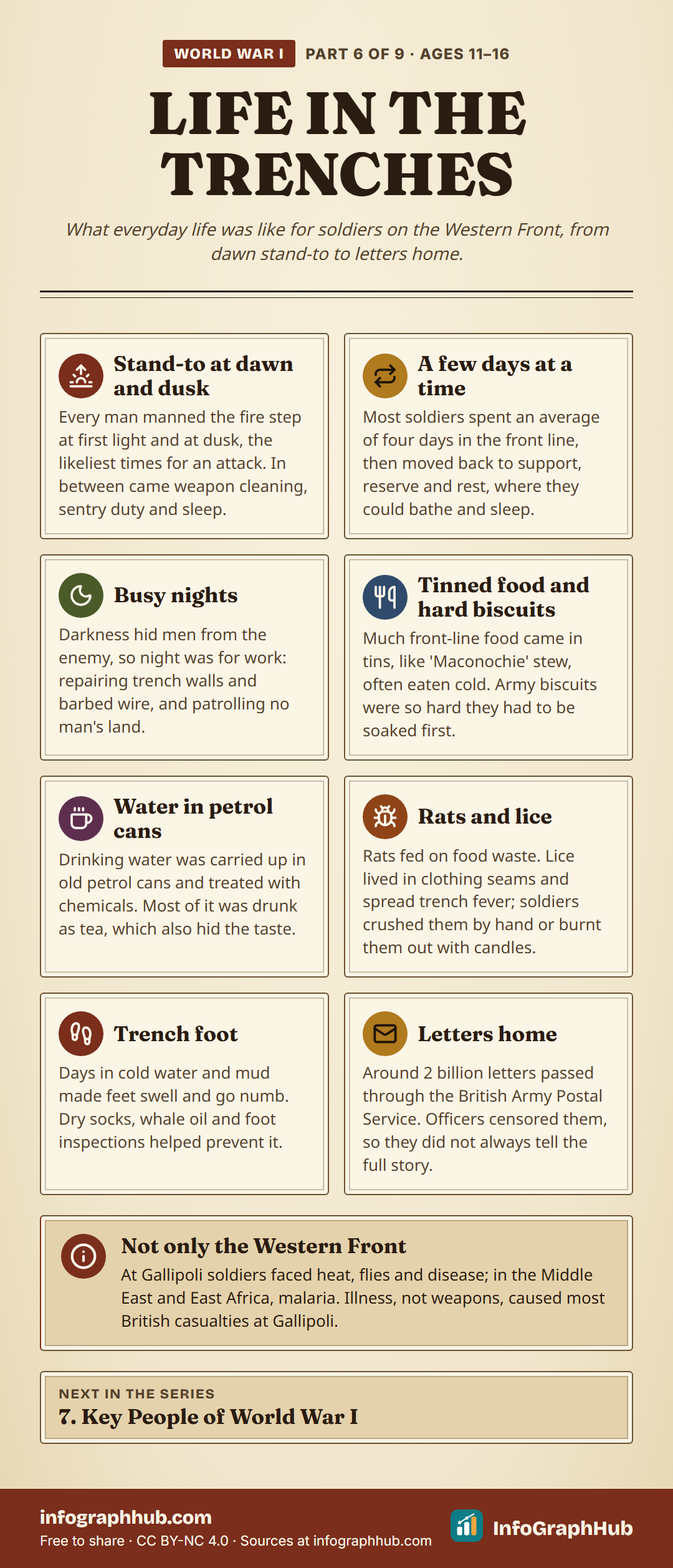
Use this infographic
Free under CC BY-NC 4.0, with credit to InfoGraphHub.
Why there were trenches
After the Battle of the Marne in September 1914, neither side on the Western Front could push the other back, and machine guns and artillery made open ground deadly. Soldiers dug in for protection, and by the end of the year lines of trenches stretched from the Channel coast to Switzerland.
A trench system was more than one ditch. Front-line trenches faced the enemy across no man's land, the ground between the two sides. Behind them ran support and reserve lines, joined by communication trenches that men used to move up and down. A trench was usually about two metres deep, with wooden supports along the sides, and dugouts were cut into the walls for shelter and sleep.
A day in the line
Most of a soldier's time in the trenches was routine, not battle. In British units, a typical day began with stand-to at dawn, when every man manned the fire step in case of an attack at first light. Then came cleaning weapons, a tot of rum and breakfast. Sentries were posted, and other men could sleep until lunchtime. In the afternoon soldiers repaired the trenches, and stand-to came round again at dusk.
Activity grew at night, when darkness hid men from the enemy. Soldiers climbed out to repair the trench walls and barbed wire and to patrol no man's land, while sentries kept watch.
Soldiers did not stay in the front line for months. IWM says most spent an average of four days at a time there before moving back to support, then to reserve and rest, where they could bathe, sleep properly and eat hot meals. Some sectors were busy and dangerous; others were quiet, with an unofficial 'live and let live' attitude.
Food and water
Feeding millions of soldiers was a huge task. By 1918 Britain was sending over 30 million kg of meat to the Western Front every month. Rations were meant to include fresh or frozen meat, but much of what reached the front line was tinned, such as 'Maconochie' beef and vegetable stew, often eaten cold. Hard army biscuits had to be soaked before they could be eaten safely. German soldiers had field kitchens and bakeries too, and food was sometimes carried forward in special containers, or even by dogs.
Drinking water arrived at the front in petrol cans and was treated with chemicals. Most of it was drunk as tea, which also hid the taste.
Rats, lice and trench foot
Crowded, muddy trenches were ideal for pests. Rats were drawn by food waste, and some soldiers kept cats and dogs to hunt them. Lice lived in the seams of clothing, made skin itch and spread trench fever, which felt like flu. Soldiers crushed them between their fingernails, a job they called 'chatting', or ran a candle flame along the seams.
Trench foot came from standing for days in cold water and mud. Feet swelled, went numb and could become infected; in the worst cases they had to be amputated. To prevent it, officers inspected feet, and men were told to dry their feet, change into dry socks and rub them with whale oil. Washing and fresh clothes behind the lines helped, though lice soon came back.
Letters home
Letters were the main link with home. The British Army Postal Service delivered around 2 billion letters during the war, and in 1917 more than 19,000 mailbags crossed the English Channel each day. Officers read soldiers' letters before they were sent, and censored anything that might help the enemy, so letters do not always show the full picture. Even so, they are one of historians' best sources on trench life.
Other fronts, other trenches
Trenches looked different elsewhere. At Gallipoli in 1915, soldiers faced summer heat, swarms of flies and serious disease, then trench foot and frostbite when winter came. IWM reports that of about 213,000 British casualties there, 145,000 were from illness. In Mesopotamia, Palestine and East Africa, malaria was a constant danger. Indian soldiers reached the Western Front in the autumn of 1914, and IWM notes they suffered trench foot and frostbite only half as often as British troops that winter.
Frequently asked questions
What was daily life like in the trenches?
Mostly routine: stand-to at dawn and dusk, cleaning weapons, sentry duty, repairing trenches by day and carrying supplies or mending wire at night. Danger came from shells, snipers and raids, and conditions were cold, wet and crowded.
How long did soldiers stay in the front-line trenches?
Usually only a few days at a time. IWM says most soldiers spent an average of four days in a front-line trench before moving back to support and reserve lines and then to rest behind the lines.
What was trench foot?
A painful condition caused by standing for long periods in cold water and mud. Feet swelled, went numb and could become infected, sometimes needing amputation. Soldiers were told to dry their feet, change their socks and rub on whale oil, and officers inspected their feet.
What did soldiers eat in the trenches?
Mainly tinned food such as 'Maconochie' beef and vegetable stew, hard biscuits, bread when it could be brought forward, and lots of tea. Hot meals were cooked in field kitchens behind the lines and carried forward when possible.
Sources & methodology
Every fact is checked against the sources below. We write original explanations and draw original graphics; no figures are copied from textbooks. Spotted an error? See our corrections policy.
- Life At The World War 1 Front Line In 14 Objects (Imperial War Museums (IWM), accessed 1 Oct 2026)
- Keeping Clean And Healthy In Trenches During World War 1 (Imperial War Museums (IWM), accessed 1 Oct 2026)
- Food That Fuelled The Front Line During World War 1 (Imperial War Museums (IWM), accessed 1 Oct 2026)
- Letters To Loved Ones In The First World War (Imperial War Museums (IWM), accessed 1 Oct 2026)
- What was life like on the front line in World War One? (BBC Bitesize (KS3 History), accessed 1 Oct 2026)
- Trench Warfare (National WWI Museum and Memorial, accessed 1 Oct 2026)
- Letters from the First World War, 1915 (The National Archives (UK), accessed 1 Oct 2026)
- Why Gallipoli Was One Of The Worst Fighting Fronts Of WW1 (Imperial War Museums (IWM), accessed 1 Oct 2026)
- India and the First World War (Imperial War Museums (IWM), accessed 1 Oct 2026)
- Why Whales Were Vital In The First World War (Imperial War Museums (IWM), accessed 1 Oct 2026)
Editorial review pending · Updated
Made by the InfoGraphHub editorial team (how we research and check: editorial and AI policy). First published 2 October 2026, last reviewed 1 October 2026. Found a mistake? Tell the editors.
For teachers: ages and curriculum fit
Ages 11–16 · Grades 6–10 (US) · Years 7–11 (UK) · Classes 6–10 (India)
Embed this on your site
Paste this HTML into your page. Keep the credit line: it is required by the CC BY-NC 4.0 license.
Related infographics


For teachers and parents: new InfoGraphHub resources by email
One short email when new free resources go live. For adults (18+) only. No spam, no tracking in emails, unsubscribe anytime.