earth science infographics
Every InfoGraphHub infographic tagged “earth science”.
 Science
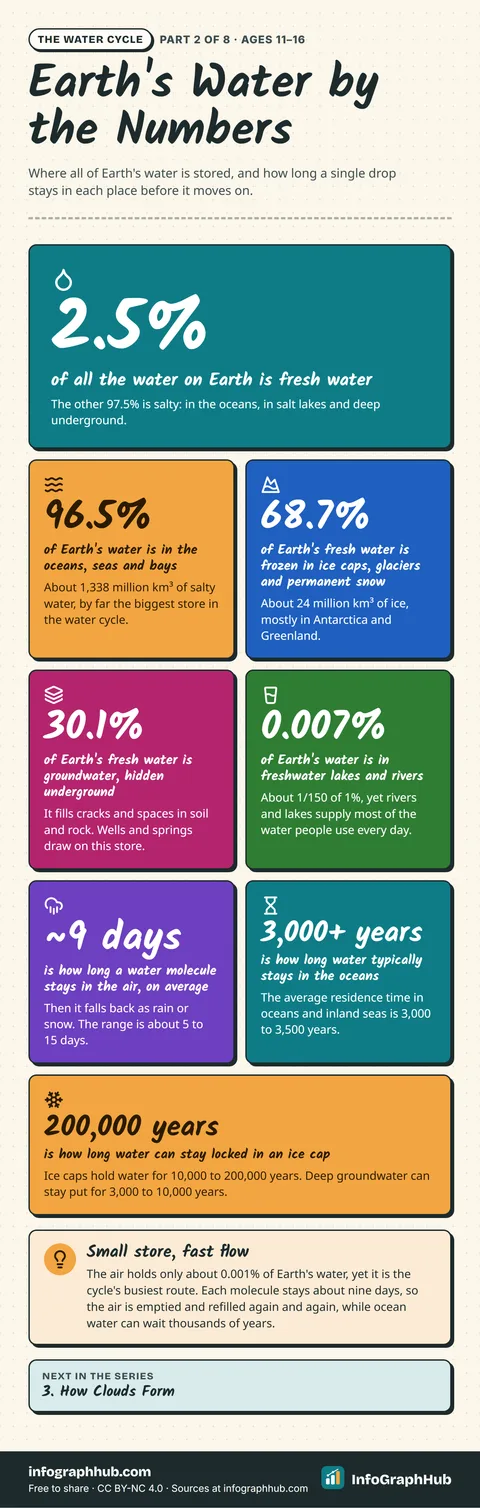
Earth's Water by the Numbers
Where is all of Earth's water, and how long does it stay there? Only 2.5% is fresh, most of that is frozen or underground, and a drop can spend nine days in the air or thousands of years in the ocean or an ice cap.
 Science
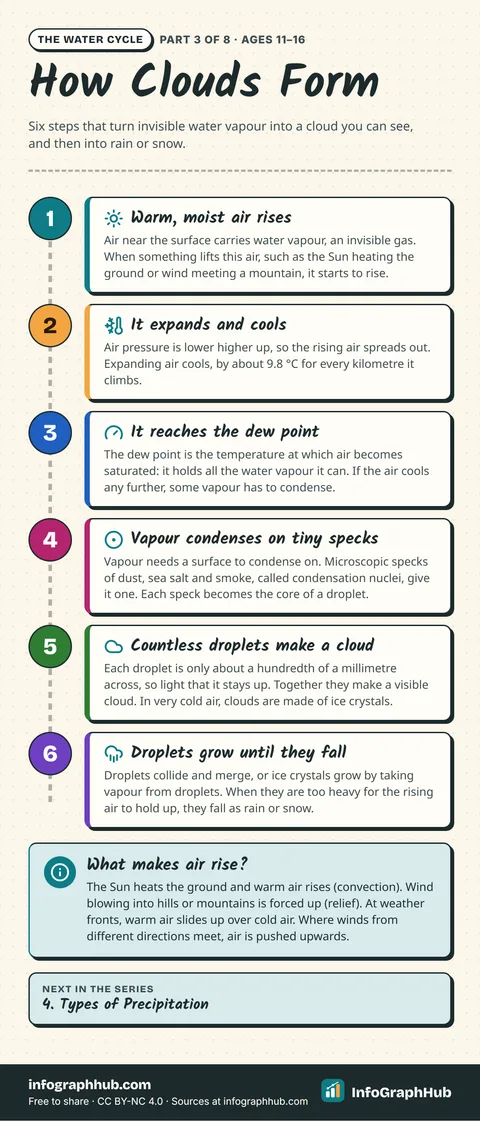
How Clouds Form
How does invisible water vapour become a cloud? Moist air rises, expands and cools to its dew point, then vapour condenses on specks of dust, salt and smoke into tiny droplets or ice crystals that grow until they fall as rain or snow.
 Science
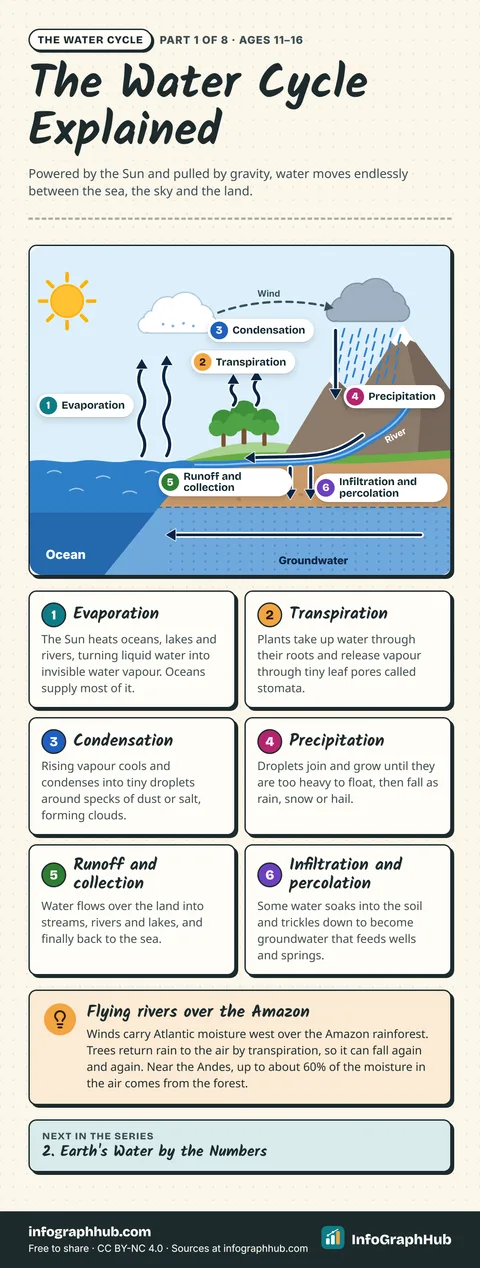
The Water Cycle Explained
The water cycle is the non-stop movement of water between oceans, air and land. Powered by the Sun, water evaporates, condenses into clouds, falls as rain or snow, and flows or soaks back towards rivers, groundwater and the sea.
 Science
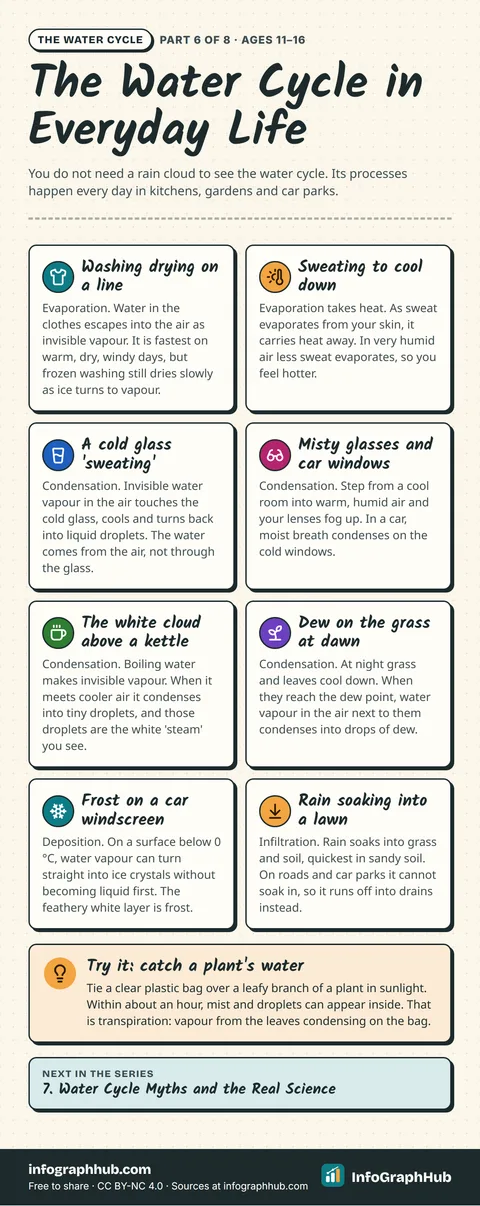
The Water Cycle in Everyday Life
You can watch the water cycle at home and outside every day: washing drying, a cold glass 'sweating', the white cloud above a kettle, dew, frost and rain soaking into a lawn. Each one shows a real process, from evaporation to deposition.
 Science
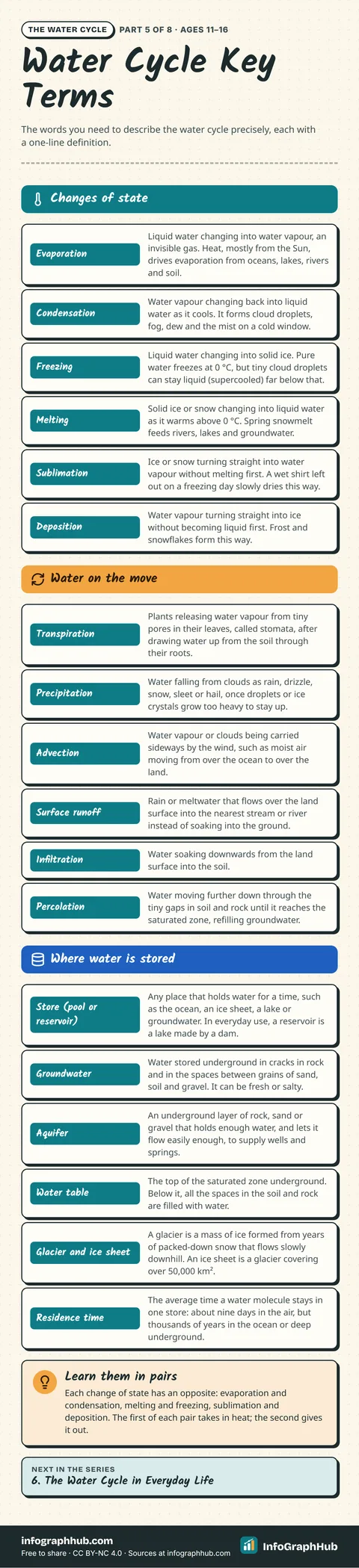
Water Cycle Key Terms
A cheat sheet of 18 water cycle key terms with precise one-line definitions, grouped into changes of state, water on the move and where water is stored, from evaporation and sublimation to advection, aquifers and residence time.
 Science
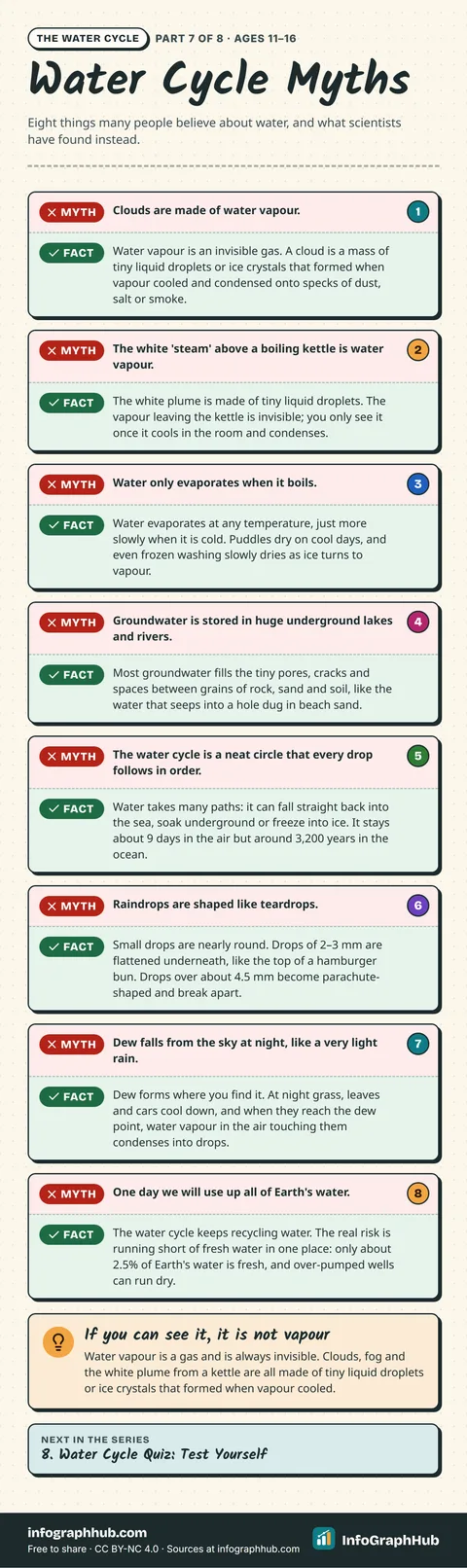
Water Cycle Myths and the Real Science
Eight common water cycle myths, corrected with evidence: clouds are not water vapour, kettle 'steam' is droplets, water evaporates without boiling, groundwater fills pores rather than underground lakes, raindrops are not teardrops, and more.
 Science
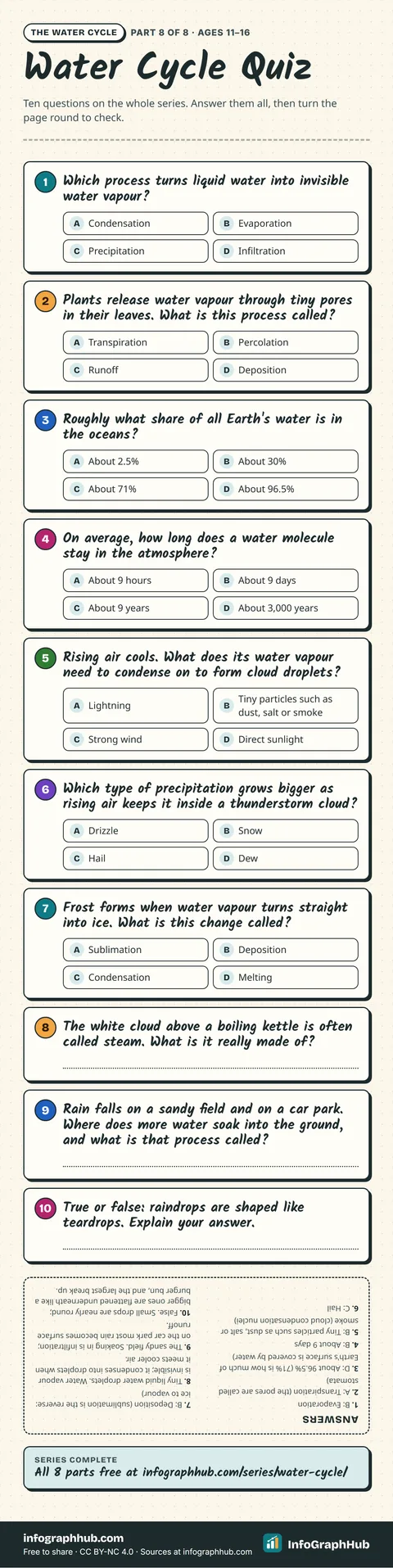
Water Cycle Quiz: Test Yourself
Ten questions covering the whole water cycle series: the main stages, where Earth's water is stored, how clouds form, hail, key terms and common myths. Seven are multiple choice and three need a short written answer, with a full worked answer key.