compound interest infographics
Every InfoGraphHub infographic tagged “compound interest”.
 Finance
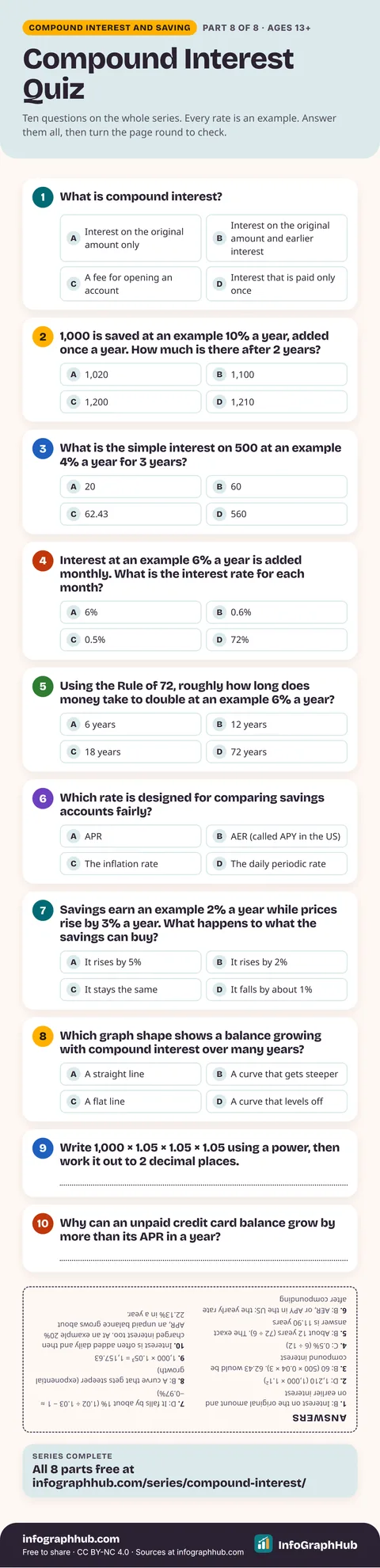
Compound Interest Quiz: Test Yourself
Ten questions covering the whole Compound Interest and Saving series: what compounding means, calculating balances, simple interest, monthly rates, the Rule of 72, AER and APY, inflation, growth curves and credit card debt, with worked answers.
 Finance
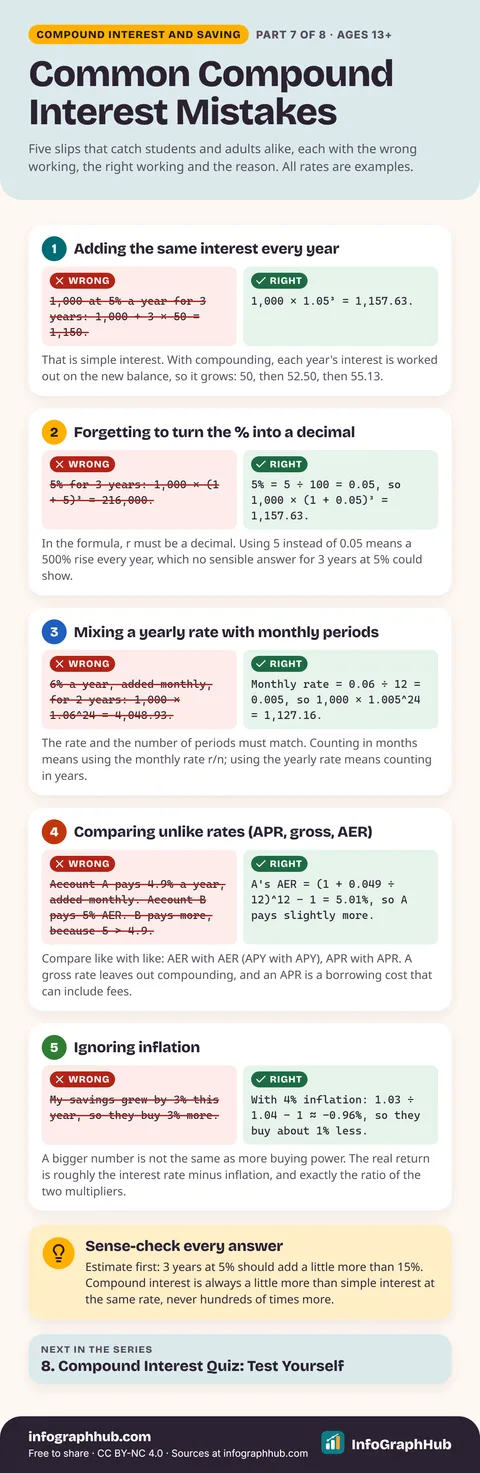
Common Compound Interest Mistakes and How to Avoid Them
Five common compound interest mistakes with the wrong working, the right working and why: adding the same interest every year, forgetting to turn % into a decimal, mixing yearly rates with monthly periods, comparing unlike rates and ignoring inflation.
 Finance
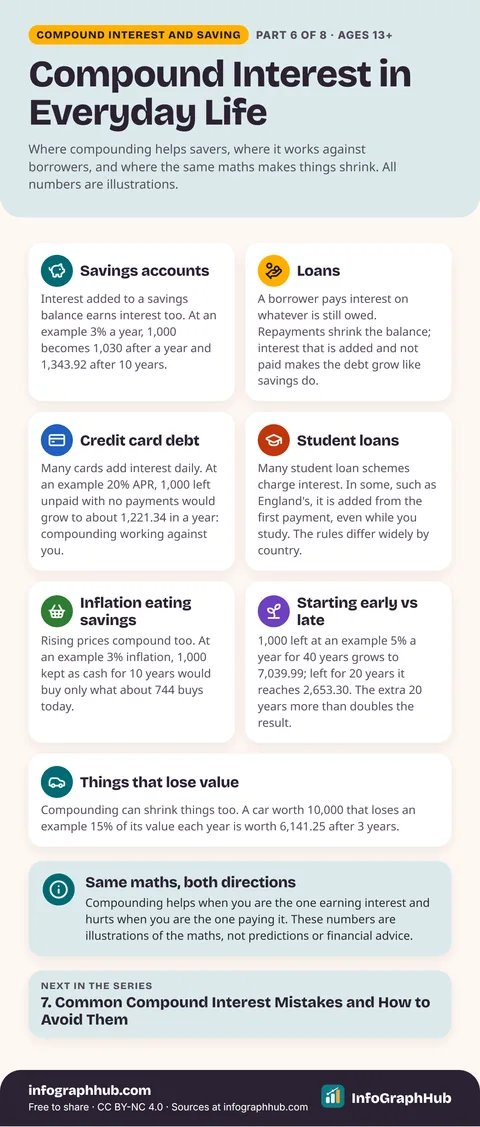
Compound Interest in Everyday Life
Seven places compound growth shows up in real life, with illustrative numbers: savings accounts, loans, credit card debt that compounds against you, student loans, inflation eating savings, starting early versus late, and things that lose value.
 Finance
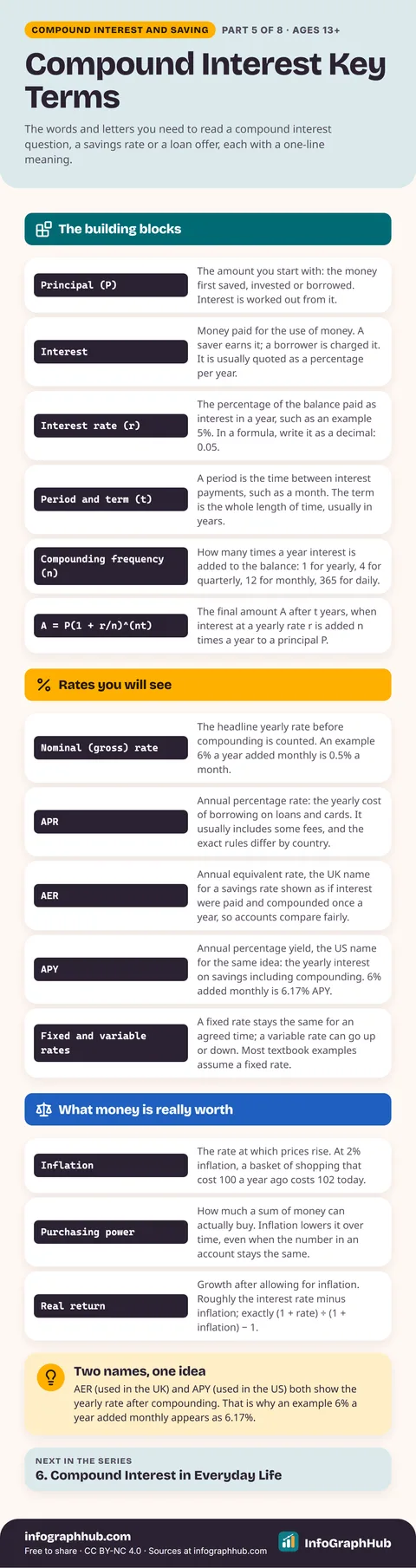
Compound Interest Key Terms: APR, AER, APY and More
A cheat sheet of 14 compound interest key terms with one-line meanings: principal, rate, period, compounding frequency and the formula, then APR, AER and APY (two names for one idea), fixed and variable rates, inflation and real return.
 Finance
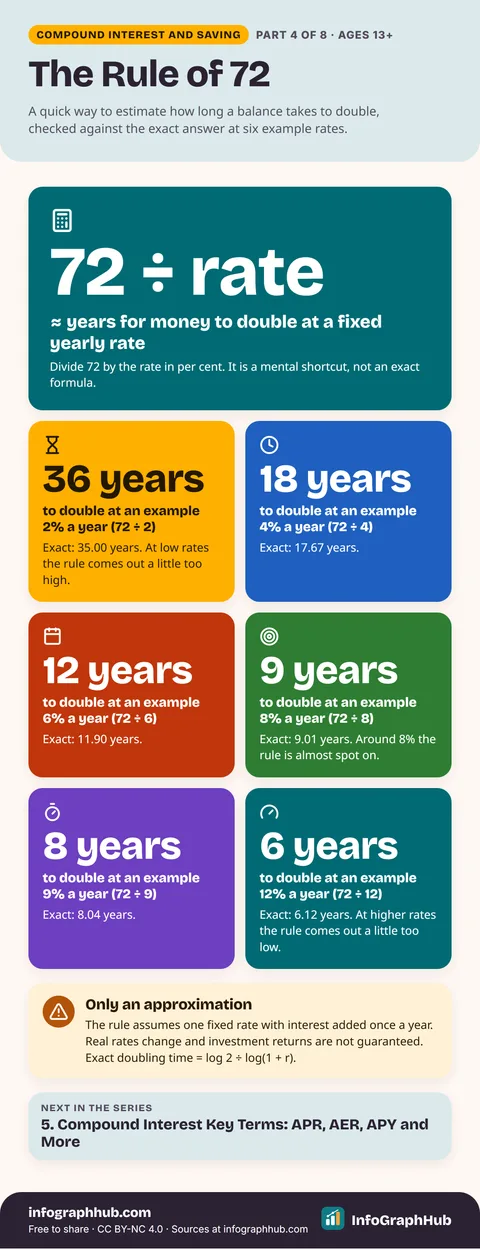
The Rule of 72: How Long Does Money Take to Double?
The Rule of 72 estimates doubling time by dividing 72 by the yearly rate. Its estimates at example rates of 2% to 12% sit beside the exact answers: 36 years against 35.00 at 2%, 9 against 9.01 at 8%, 6 against 6.12 at 12%.
 Finance
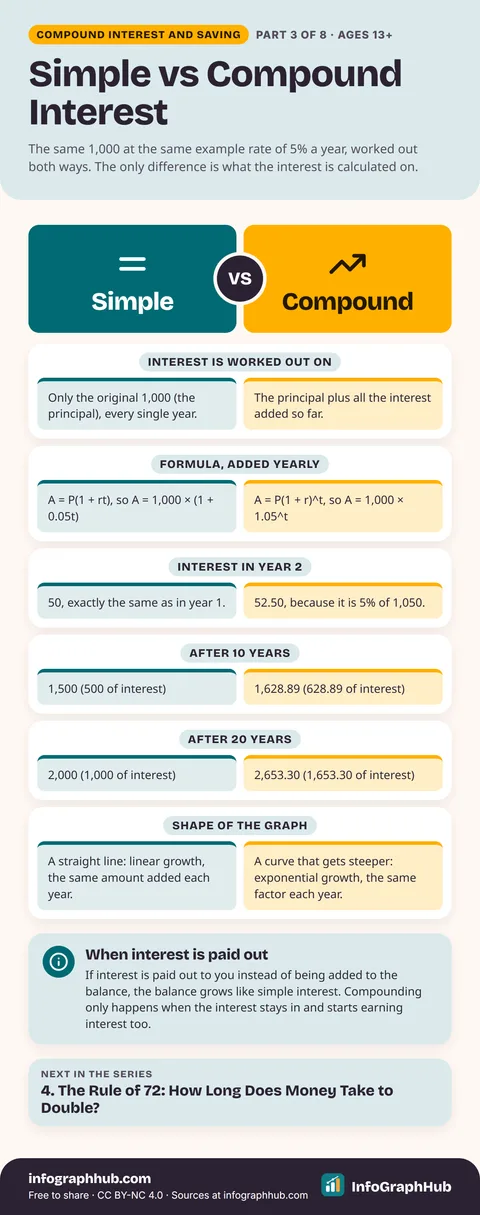
Simple vs Compound Interest: What Is the Difference?
Simple interest is worked out only on the starting amount; compound interest is worked out on the starting amount plus interest already added. Side by side with the same 1,000 at an example 5%: 2,000 against 2,653.30 after 20 years.
 Finance
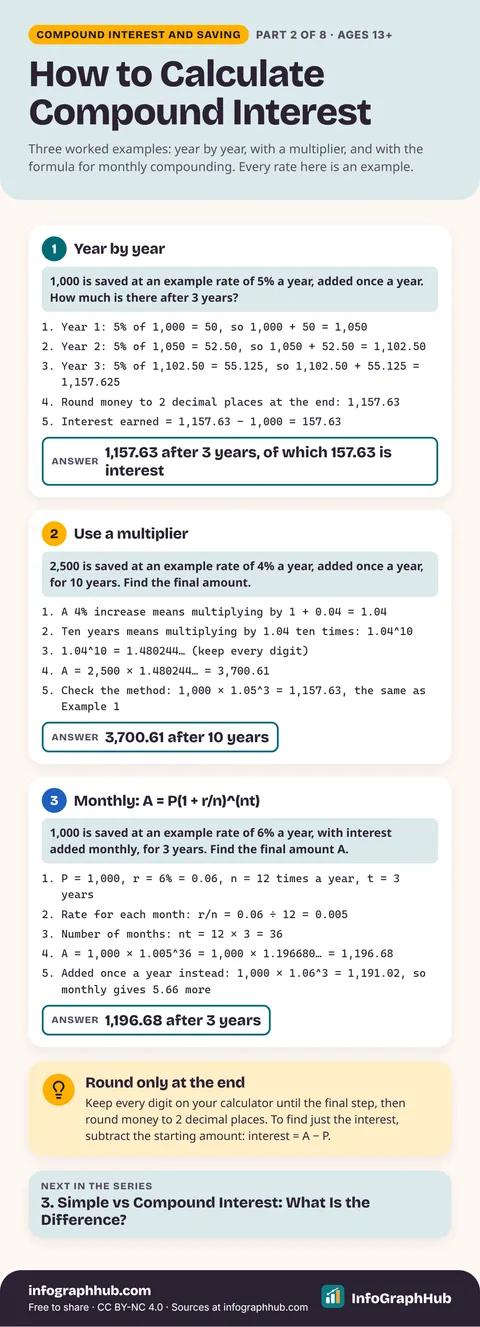
How to Calculate Compound Interest: Worked Examples
Three worked examples of calculating compound interest: 1,000 at an example 5% year by year for 3 years, the multiplier shortcut for 10 years, and the formula A = P(1 + r/n)^(nt) with interest added monthly.
 Finance
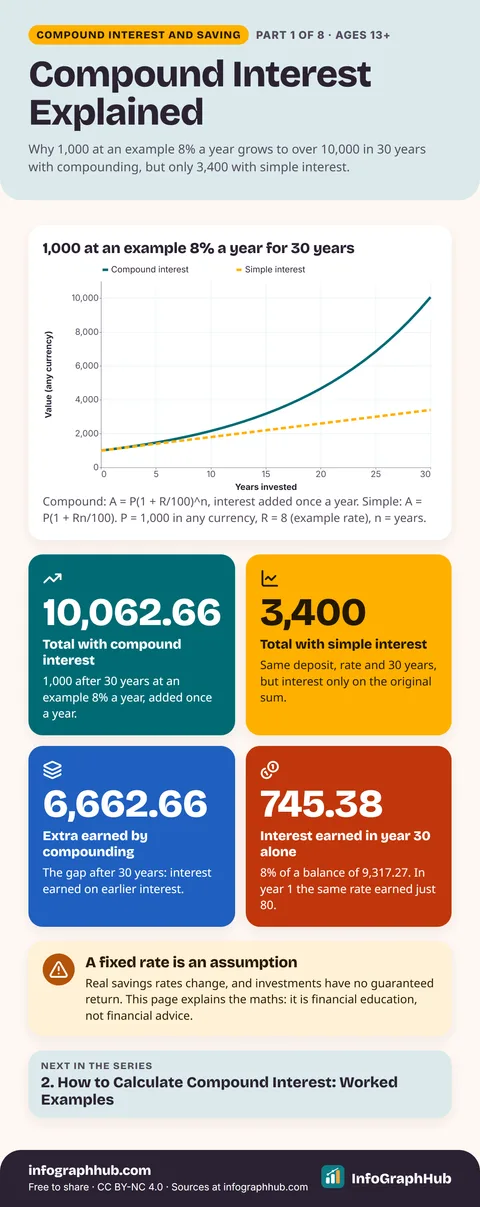
Compound Interest Explained: How Money Grows Over Time
Compound interest is interest earned on interest. Each year's interest joins the balance, so the next year's interest is worked out on a bigger sum. Over 30 years at an example 8% rate, 1,000 grows to 10,062.66, against 3,400 with simple interest.