money maths infographics
Every InfoGraphHub infographic tagged “money maths”.
 Finance
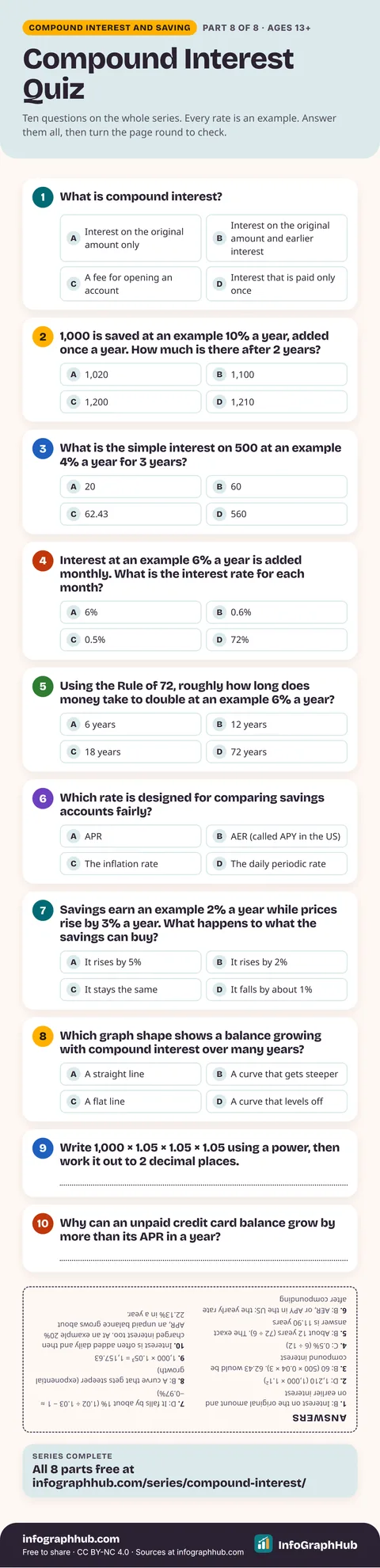
Compound Interest Quiz: Test Yourself
Ten questions covering the whole Compound Interest and Saving series: what compounding means, calculating balances, simple interest, monthly rates, the Rule of 72, AER and APY, inflation, growth curves and credit card debt, with worked answers.
 Finance
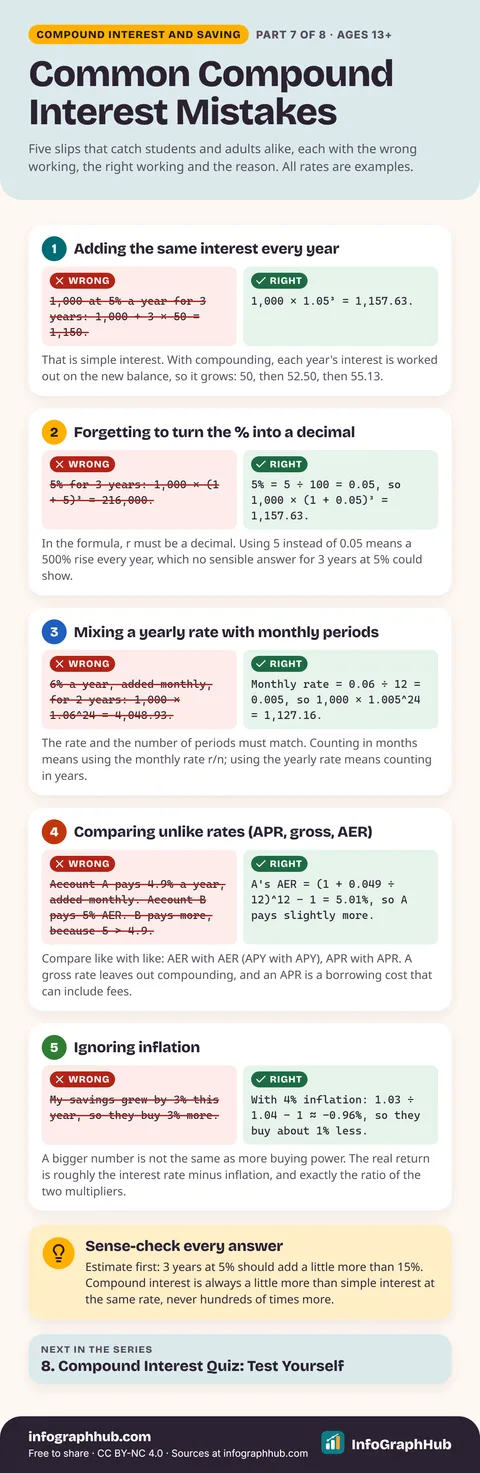
Common Compound Interest Mistakes and How to Avoid Them
Five common compound interest mistakes with the wrong working, the right working and why: adding the same interest every year, forgetting to turn % into a decimal, mixing yearly rates with monthly periods, comparing unlike rates and ignoring inflation.
 Finance
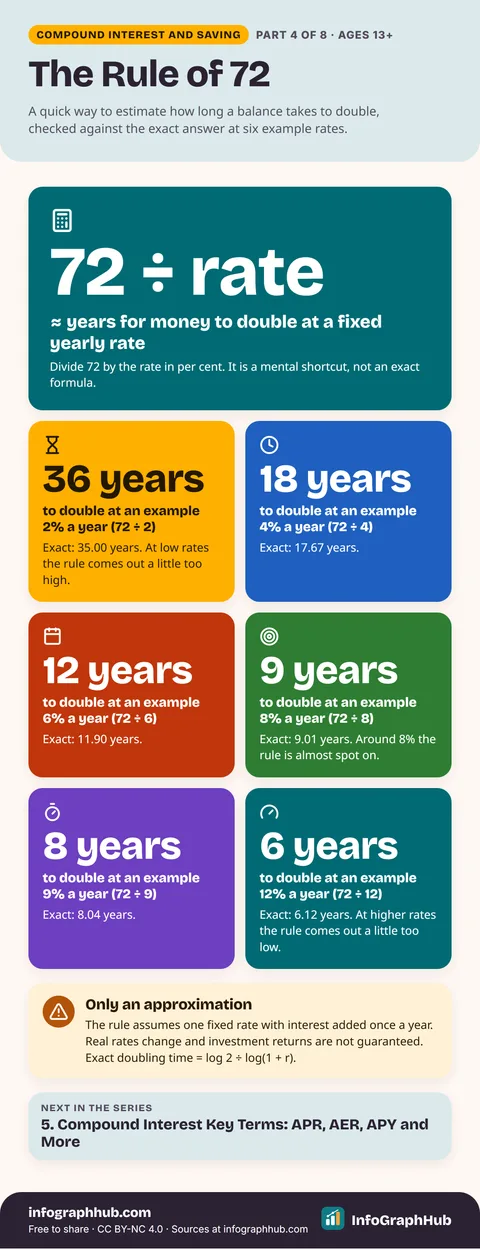
The Rule of 72: How Long Does Money Take to Double?
The Rule of 72 estimates doubling time by dividing 72 by the yearly rate. Its estimates at example rates of 2% to 12% sit beside the exact answers: 36 years against 35.00 at 2%, 9 against 9.01 at 8%, 6 against 6.12 at 12%.
 Finance
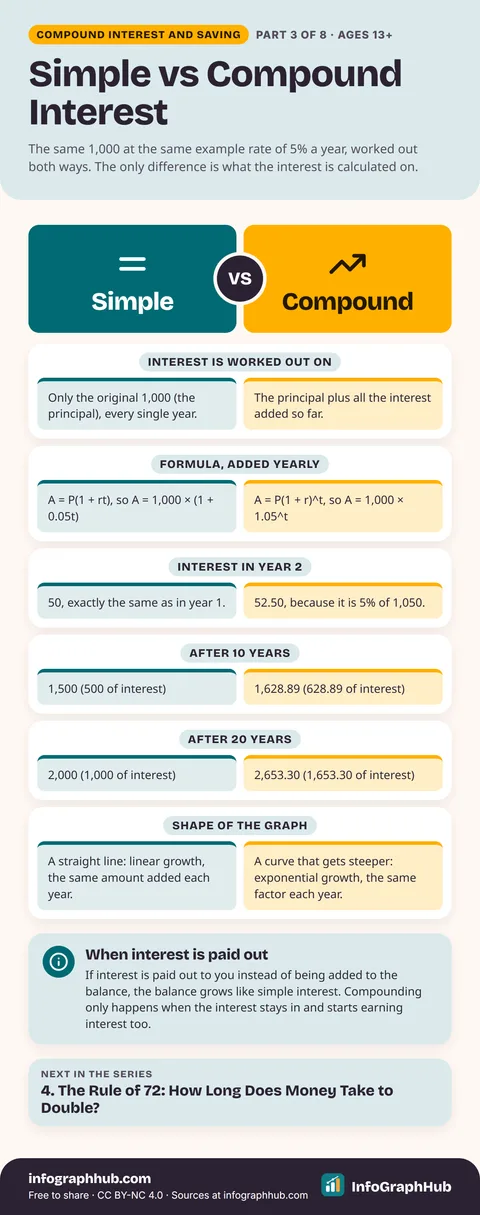
Simple vs Compound Interest: What Is the Difference?
Simple interest is worked out only on the starting amount; compound interest is worked out on the starting amount plus interest already added. Side by side with the same 1,000 at an example 5%: 2,000 against 2,653.30 after 20 years.
 Finance
How to Calculate Compound Interest: Worked Examples
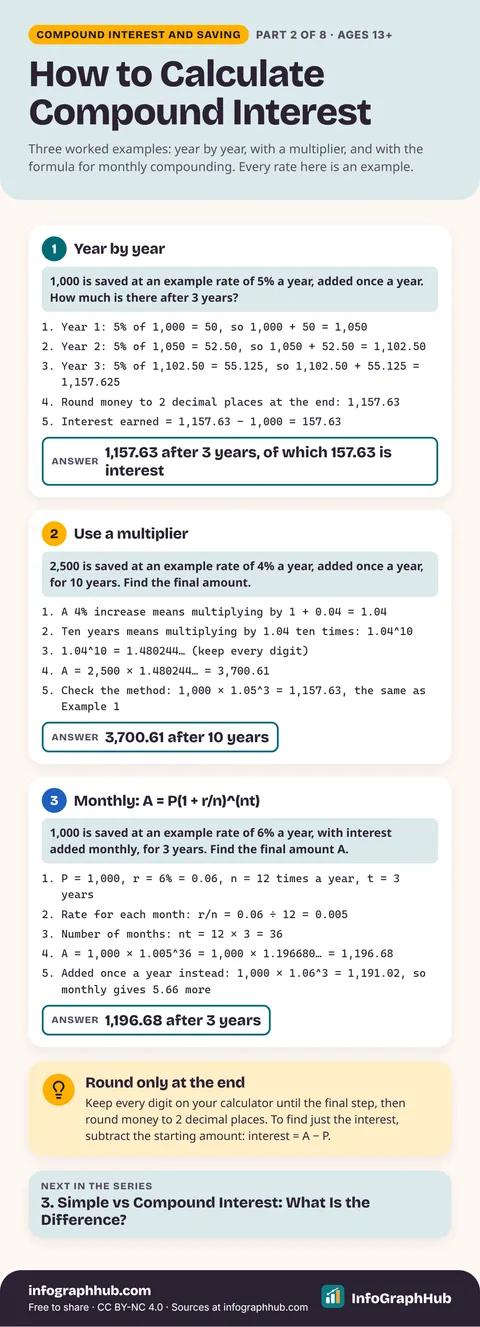
Three worked examples of calculating compound interest: 1,000 at an example 5% year by year for 3 years, the multiplier shortcut for 10 years, and the formula A = P(1 + r/n)^(nt) with interest added monthly.
 Finance
Compound Interest Explained: How Money Grows Over Time
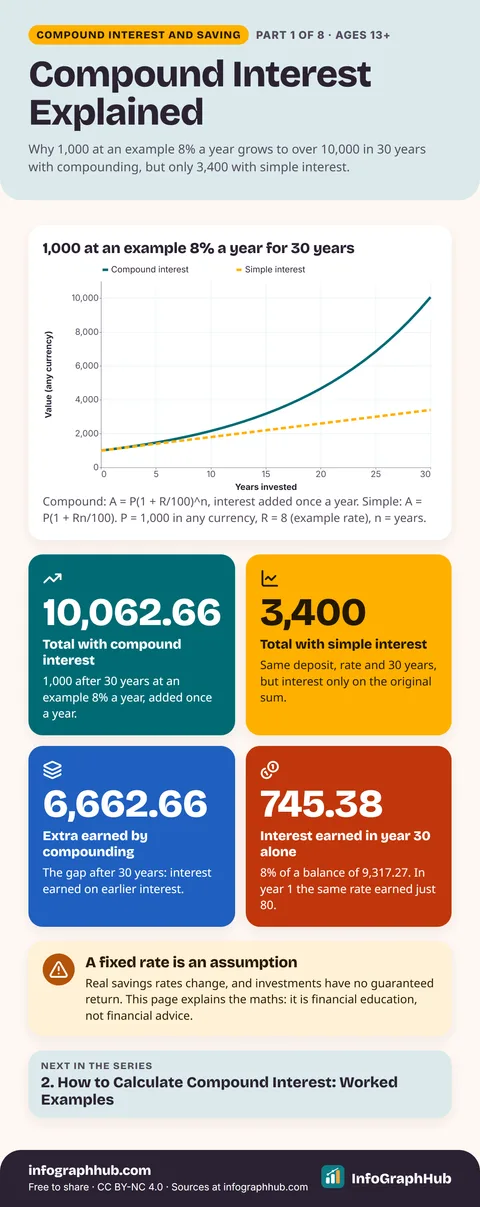
Compound interest is interest earned on interest. Each year's interest joins the balance, so the next year's interest is worked out on a bigger sum. Over 30 years at an example 8% rate, 1,000 grows to 10,062.66, against 3,400 with simple interest.